news

Facebook Enhances Algorithm to Deliver More Video Content

by Brian Cox

Last year, Facebook changed its algorithm to favor video content in an effort to gain market share in the very popular video content market. In fact, it’s done such a good job that daily video views increased by 400 percent – a huge rise over its September, 2014 numbers of 1 billion per day,  to an incredible 4 billion per day. That’s a significant rise in less than a year.

Now, as a further enhancement, at the end of June, 2015, Facebook announced that it is again making tweaks to its algorithm so as to better identify the types of video content its users want. In the past, Facebook’s algorithm tracked the types of content that each individual user liked, and subsequently delivered more of that type of content. For example, users that interacted with photo content the most would be delivered more photo content. And the same for video. However, it always necessitated action on the part of the user. Whether that action materialized as a like, share or comment, Facebook’s algorithm noted that and factored that into the content type it delivered to that person.

In a recent blog article, Facebook shared, “There are many times people don’t want to like, comment on, or share a post, but this does not mean it wasn’t meaningful to them. In an effort to capture that meaningful content without actionable engagement, Facebook is now taking into account more interactions with videos that we have learned indicate whether someone found that video interesting, such as choosing to turn on sound, making the video full screen, and enabling high definition. So, if you turn the volume up, or make the video full screen, we have updated News Feed to infer you liked the video and will show you similar videos higher up in your News Feed. We have found that this helps us show people more videos that they are interested in.”

This comes on the heels of another significant algorithm change that was also made in June, 2015, whereby Facebook started to track how long a user lingered on a video in their Newsfeed. Facebook began using this as an indicator of relevance to that user and factored this in as an indication of interest.

From a video marketing perspective, this algorithm now enables auto dealers to see increased reach for their videos from consumers that watched them, but took no further action. Chances are, if a consumer is watching your video on Facebook – whether they are interacting with it or not – they are pretty low down the funnel. Facebook’s new algorithm will take note that they lingered on your video, interpret that as interest, and increase the priority as far as delivering similar content to that user.

Facebook knows that its popularity hinges on finding the right balance between satisfying its advertisers and delivering the types of content its users want to see. By continuing to tweak its algorithm, Facebook can more successfully deliver interesting and relevant content to individual users, providing a better overall customer experience and increased opportunities for video marketers to reach relevant consumers.


 

Digital Dealer 18 Recap: Fusion Bombs and Video Marketing

IMG_4007As the sun sets on another Digital Dealer Conference, once again Flick Fusion is proud and honored to have participated. This spring’s conference saw a new location: Tampa, FL. We feel it was an excellent venue that offered just the right balance of hotel accommodations and some wonderful nightlife venues for dealers and attendees to learn some new best practice tips while also having a little fun.

IMG_4005Flick Fusion’s adventure began as a sponsor or the official Digital Dealer Kick-Off party on Monday night. The event itself drew over 600 RSVP’s and was a great success. Dealers and vendors had the opportunity to partake of our signature drink – the Fusion Bomb. This drink proved incredibly popular and it was great to see party goers sporting the Flick Fusion colors as part of their drinks. A live DJ kept the party hopping and the venue – Jackson’s Bistro – turned out to be an excellent venue; both for the spectacular waterfront views and delicious food.

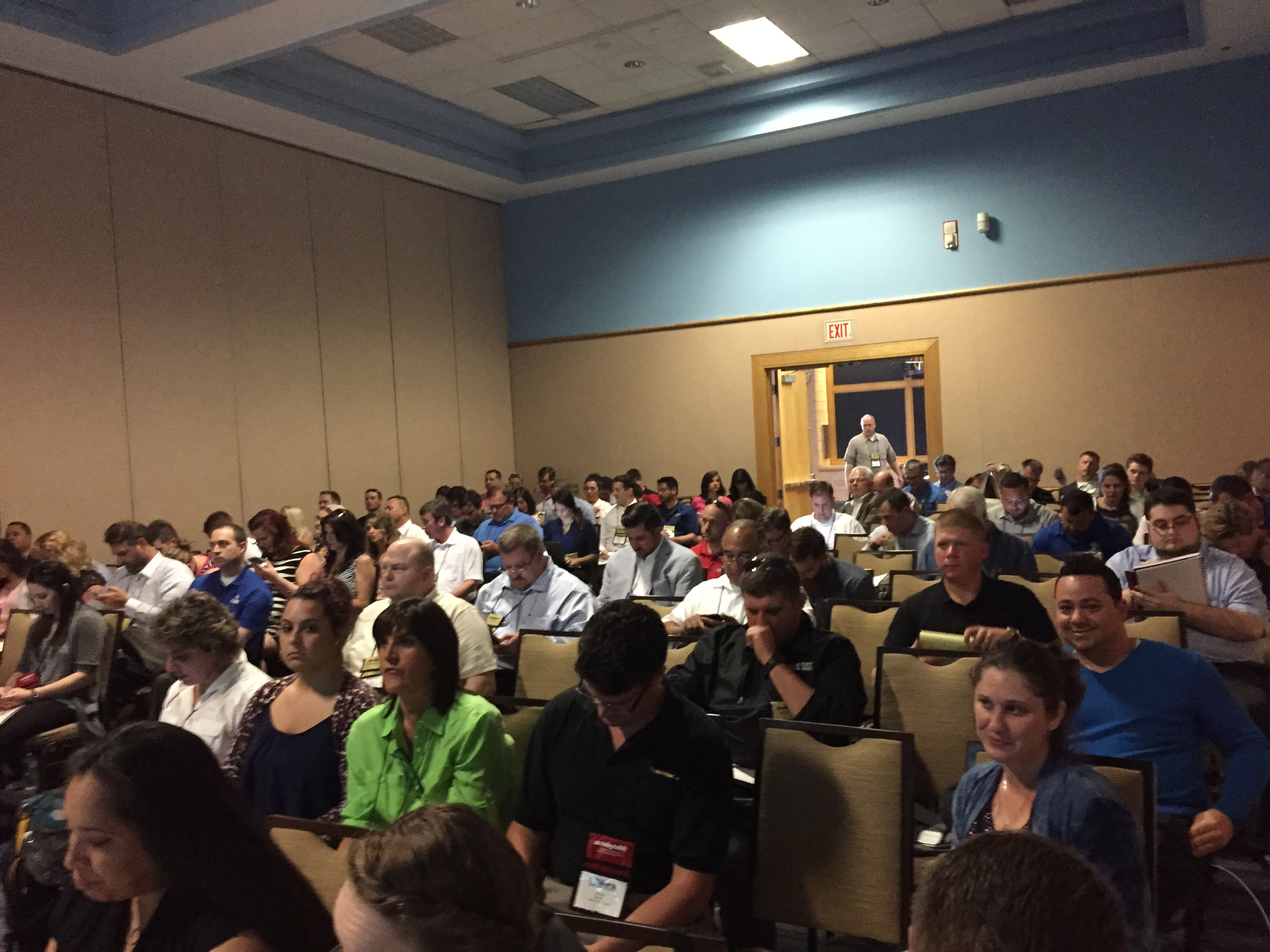
2015-04-22 13.31.09Wednesday highlighted the prime reason that Flick Fusion attends – to educate dealers. Speaking to a packed room, perennial speaker and Flick Fusion’s VP of Sales, Tim James, educated dealers on the importance of video marketing. Attendees of the lively, highly popular session were provided with all the statistics that truly illustrate the true value of video marketing. They left with step-by-step instructions as to how to immediately implement a video marketing campaign in their stores.

2015-04-22 13.34.14If you’d like a copy of this powerful presentation, click here and fill out the contact form.

Thanks to the staff of the Digital Dealer Conference for putting on one of the best Digital Dealer Conferences ever. Feedback has been very positive from vendors and dealers alike. And thank you to all of the attendees who flocked to the exhibit hall and kept the booths packed. Also, thanks to everyone who came to see Tim James’ session. See you next time at the 19th Digital Dealer Conference in Las Vegas!

Consumers Like Video So Much They’re Paying More To Watch It

by Tim James

Video, and especially mobile video, is fast becoming the media of choice for consumers of all ages. From the cable-free movie, to online streaming services, to the latest and greatest phone apps storming the scene, we are all consuming data at a record pace. According to a white paper by Cisco, mobile data has increased in size nearly 30 times since the year 2000. And mobile video accounts for 55 percent of all data traffic.

Today, consumers are increasing data plans with their cellular phone companies so as to consume more video – and they’re doing so willingly — according to a recent article on Mashable. The article reports the massive growth of the mobile live-streaming app, Meerkat. With Twitter entering the live-streaming market Monday via their recent acquisition of Periscope, smartphone users are finding more ways to share video with each other than ever before. In fact, in less than 24 hours, Periscope broke into the top 50 apps on the iTunes app store illustrating the remarkable demand for video content. And, according to the article, “wireless carriers have invested more the $1 trillion in the last few years to build out networks capable of serving massive amounts of data and high speeds.”

And as far as video itself — Almost every major social media application has integrated video into their platforms. Why? Because that’s what their users want. Videos are given more organic reach on Facebook. Platforms are opening up their APIs to allow for video embedding. User-generated video content is exploding. And consumers have made it very clear that they like video content so much that they are willing to increase their cellular phone budgets so as to consume more of it. If this is the case, then why not market to them in their format of choice?

Back in the day, most people read physical newspapers and watched local television… and that’s where car dealers advertised. For lack of subscribers, newspapers moved online, or went out of business. And then, as streaming video services became a more popular (and less expensive) alternative, people started ditching cable.

None of us knows what the future will bring. Change will come, but we don’t know what or when. All we do know for certain is that right now… video is where consumers have placed their attention. And not just video, but especially in mobile format. If only for that single reason, that’s the content car dealers should be producing. Take a look at your marketing and see how you can improve on your video content. It would also be wise to ensure that your web content and any video is mobile ready, so this new generation of consumers can access and even share your content.

How A Dog May Have Just Reinvented Pre-Roll Video Ads

by Brian Cox

We all know how annoying pre-roll video ads can be – especially when they have nothing to do with the video content we’re about to watch. Many people hover their mouse cursor over the countdown just itching to click “Skip Ad” the second that option is available. As reported by USA Today, the insurance company Geico, may have found a way to keep people around to watch.

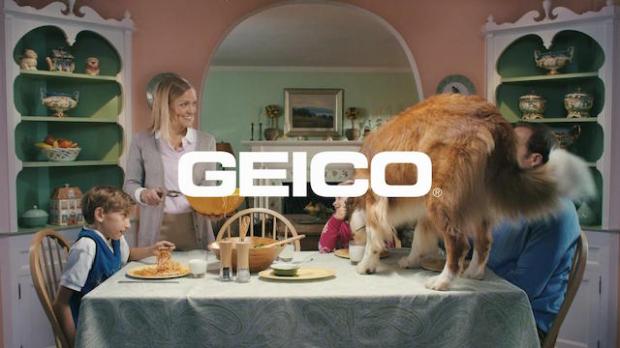
In a nutshell, Geico used only the first 5 seconds (the amount of time someone would have to watch before the “Skip Ad” option appears) and stated, “You can’t skip this Geico ad because it’s already over.” In the background a family acts as if they are frozen in time at the dinner table. On screen is a dog that then proceeds to eat everything on the table while the actors stay as frozen as possible (although you can tell that they aren’t). It’s actually very well done and pretty amusing. The trick is that the Geico logo is on screen the whole time so, in essence, you’re watching the whole ad. The article reports that, on March 3, the ad had “logged more than 725,000 unaided YouTube videos in one day.” That’s pretty incredible.

The reason this ad is seeing so much success is simple. It is one that every dealer or marketer should take note of – they had a strategy. The producers of the ad, the Martin Agency, knew they faced the same challenges and had to solve the same problem that every other company utilizing pre-roll video does – How to stop people from clicking “Skip Ad.” Most companies fail this challenge as not many of these pre-roll video ads tempt anyone to stick around and watch.

So, rather than try to answer the question which most marketers have been unable to, they chose to think outside-the-box. With just 5 seconds to convince people not to click “Skip Ad,” rather than putting the meat and potatoes of the ad AFTER those five seconds, (which is how most traditional pre-roll is organized), they chose to put it BEFORE.

Then they got creative…

What would make someone continue to watch an ad – that’s not supposed to be an ad – after the “Skip Ad” option appeared? From the buzz this has generated, it would seem that a dog having a good old time tearing up everyone’s dinner from atop the table was a winning formula.

I suspect that the success of this campaign will cause other companies to start using those five seconds in other creative ways. The important thing to remember is that simply throwing video onto the Internet is not effective – and it’s not video marketing. Without a strategy in place to make your video marketing efforts successful, you may just be wasting your time.

Marketing Trends Illustrate the Importance of Video

by Tim James

If you still aren’t sold on the importance of video marketing, it only takes a brief glimpse into recent news to illustrate just how important video is in marketing. There are many news stories relating to acquisitions, statistics and trends, which highlight the increasing importance – and value – that platforms of all kinds are placing on video content. The common thread that exists throughout all of these stories is companies recognize consumers have a strong desire to view video content and are positioning themselves to be able to serve that up.

Consider these recent stories:

  • Facebook videos are now receiving 3 BILLION views per day. Facebook is all about relevance. It wants to serve up content that its users want to see. A recent report by social media company, SocialBakers, reported that video posts surpassed all other types of content with the highest organic reach as well as highest fan reach. In addition, Facebook gives videos that are directly uploaded to their site more organic reach than videos shared via link from YouTube. This is in an effort to boost its own video platform. Facebook has even begun to solicit celebrities and large media companies to upload their videos straight to Facebook, rather than YouTube or other platforms.
  • Twitter recently renewed its agreement with Google to allow access to Twitter’s data stream. Since their breakup in 2011, Google has had to scrape Twitter in order to serve up tweets in search results. With this new agreement in place, Google can now index Twitter content in real-time providing more SEO benefits for Twitter content. Seeing as Twitter recently added a feature allowing video tweets, it’s entirely possible that Google could serve up your tweeted videos in real-time search results.
  • Last November, in order to deliver better video ads across its many properties, Yahoo acquired BrightRoll, a video ad delivery platform, for $640 million. One month later, they acquired Evntlive and Ptch, both of which cater to the video content industry and, according to many sources, made them the largest video platform in the United States.
  • Even AOL has been bolstering its video capabilities with the acquisition of three video marketing companies in the past 5 years –the 5Min video platform for $65 million in 2010, Adap.tv for $405 million in 2013 and, most recently, Vidible in December, for an estimated $50 million.
  • There has also been a plethora of video sharing apps emerging in the last few years such as Vine – which ultimately partnered with Twitter – and Instagram, which added a video sharing feature and was purchased by Facebook for $1 billion.
  • And last, but far from least, we have the largest player of them all – Google – which acquired YouTube way back in 2006, and has grown it into the second largest search engine in the world. It is currently racing Apple to become the first company to be valued at $1 trillion.

This is just a small sample of the investments major companies are making in video. It shows the importance successful businesses are placing on video content. And, I would say, a strong belief that video content is the future. I highly doubt anyone could argue against the fact that these companies know what they’re doing, simply based on their combined net value of $1.3 trillion. If all these companies were joined into one country, this humungous sum of money would place it at number 16 out of all 194 countries in the world.

I’d say they know what they’re doing.

As Hispanics buy more cars, stores add videos in Spanish

Eighteen months ago, Coast Nissan in San Luis Obispo, Calif., introduced Spanish-language videos with each car posted online.

General Manager Eric Ideman said it was a response to two trends:

•  His customer base along the central coast is heavily Hispanic, with many speaking only Spanish or preferring to communicate in the language.

•  Data showed increasing numbers of online vehicle-shoppers watching car videos.

“We have lot of people searching [for cars] in Spanish,” Ideman said. “We wanted to make sure they could get their videos in Spanish, too.”

Hispanics account for an increasing percentage of car purchases nationally, causing dealerships across the country to reassess how they market to the demographic, according to Eley Duke III, vice president of Duke Automotive (Chevrolet-Buick-GMC-Cadillac) in Suffolk, Va.

The videos at Coast Nissan and sister store Coast BMW appear as links on the Web pages of specific vehicles. They are for new and used vehicles. And they are either vehicle walk-around videos or a series of still photos spliced together with voice-over.

Duke said the area has a small Hispanic population nearby. But, he said, he added Spanish-language videos in December to the inventory he shows on the dealership website and social media feeds because he doesn’t want to lose a single sale to a language barrier.

Duke, like Coast Nissan, added the videos at the recommendation of one of its digital ad agencies, ZMOT Auto. The agency recently announced a deal with inventory video maker Flick Fusion to provide Spanish-language voice-overs to Flick Fusion’s videos.

In 2014, Hispanics accounted for 12 percent of retail vehicle registrations minus fleet and commercial vehicles, according to IHS Automotive. The number was 9.3 percent in 2010, according to Marc Bland, IHS Automotive vice president of diversity and inclusion. “If an automotive brand is looking for growth, there’s no better place to look than the ethnic consumer — with Hispanics leading the way,” Bland said.

The U.S. Census Bureau projects that Hispanics, who numbered 52 million in the country in July 2011, or 17 percent of the population, will account for 30 percent of the population by 2050.

Duke said video-watching also is on the rise among car shoppers. “Videos are such a big part of a visual society,” he said.

According to Google’s “Digital Drives Auto Shopping” study published in November 2013, more than half of auto shoppers watch 30 minutes or more of video during their shopping journeys. Moreover, one in four watched an hour or more, the study found.

In recognition of those trends, Coast Nissan is offering all of its online inventory with videos in English and Spanish, Ideman said.

The store is not as close to heavy Hispanic foot traffic as some competitors, he said. So Coast Nissan also is ensuring that its paid search ads, blogs, chat and website content are in Spanish, too, so those customers can find and interact easily in either English or Spanish, he said.

It isn’t good enough, Ideman said, to get an online lead or phone call from Spanish-speaking customers and make them wait for a response until the store can get a bilingual salesperson to contact them.

“People want an immediate response, or they go away,” he said.

Coast Nissan sells about 80 vehicles per month split evenly between new and used.

Of the store’s six salespeople, four are bilingual. And so is Coast Nissan’s finance director, who is responsible for closing deals in finance and insurance.

Ideman said, “We want to hold them all the way through the transaction.”

Written by David Barkholz [Originally published 2/16 on Automotive News]

Announcement: Like Accelerator for Dealer Ads on Facebook

Strategic Service Delivers Ultra-Targeted Ads to Accelerate “Likes” and Drive Leads

Picture this—an ad for your dealership on the world’s leading social networking site with over 150 million users in the United States.  Now envision a truly relevant, interactive ad that is precisely targeted and customized to reach the Facebook pages of the exact demographics groups you select—created and combined with monthly performance monitoring, analysis, and strategy management so you can continually fine-tune your approach to achieve your evolving marketing goals.  The result: super-targeted ads that generate more “Likes” and traffic, and ultimately, more revenue opportunities for your dealership.

Introducing The “Like” Accelerator Service

With the “Like” Accelerator Service, your ads are created, targeted, monitored, managed, and adjusted, as needed, to maximize effectiveness on the ever-expanding universe of Facebook.  In seconds, you can exclusively pinpoint which customers or potential customers you want to reach—all by specific groupings, such as:

  • Age
  • Gender
  • Location radius
  • Workplace
  • Education
  • Interests
  • What they like—and what they’re talking about on Facebook
  • Your dealership’s current fans or customers
  • Or individuals who are not yet fans or customers

Your dealership’s color logo, active “Like” button, and promotional messages stand out in the right column on the Facebook pages of your targeted users.  When a user clicks the “Like” button in your ad, they automatically begin receiving daily News Feeds from your dealership on their profile page—which provides yet another vital touch point to share your unique deals, discounts, rebates, and specials with users.

The “Like” Accelerator Service gives your dealership the power to:

  • Leverage the unparalleled distribution potential of your dealership’s ad on Facebook
  • Handpick the targeted audience members who can see and respond to your dealership’s ad
  • Accelerate “Likes” and interaction from those who view your ad
  • Deliver customized, call-to-action messages to the right individuals at the right time—who can share word-of-mouth details about your dealership with their friends, family, and coworkers
  • Identify promotional opportunities through ongoing ad consultation to further target specific groups to optimize impact and response
  • Deepen your dealership’s Facebook presence through highly-focused, strategic marketing
  • Generate engagement online that translates offline into increased leads and revenue opportunities for your dealership

The “Like” Accelerator Service is available to you as a cost-effective standalone service, or as an add-on option for any of our existing R1, R2, R3, and R4 Digital Marketing and Social Media Packages.  The Service is standard as part of our R5 and R6 Full-Service Packages.

To learn more about leveraging the “Like” Accelerator Service for your dealership, please call Dealer Impact Systems today at 877-334-9638, or send email to us at innovation@dealerimpact.com.

Mastering the Migration from Traditional to Digital Marketing

Auto dealers leverage dynamic digital media to maximize online presence and profits

Posted by Brian Cox on December 13, 2011

Gone are the days when the big three of traditional media marketing—newspaper, radio, and television—had exclusive dibs on every last penny of a dealership’s marketing budget.  True, those old-school mediums still hold a place in a dealership’s overall marketing spend.  But, make no mistake—they’re fast being reduced to a lesser role as the majority of marketing dollars are being earmarked for digital and social media initiatives at dealerships of all sizes across the country.

The seismic shift from traditional marketing to digital marketing is being driven by progressive, forward-thinking dealerships, who are tipping the scales in favor of stores that take calculated and strategic steps to capitalize on digital marketing’s vast reach, immediacy, and cost-effective benefits.

“Digital marketing is eclipsing traditional media,” said John Roth, internet director at Roseville Toyota-Scion in Sacramento, CA—northern California’s largest Toyota-certified pre-owned store.  “It completed the waxing stage—and traditional media is waning.”  Roth notes that over the last five years, the dealership has shifted from a mix of 20 percent electronic and 80 percent traditional media marketing to approximately 60 percent digital marketing and about 40 percent traditional.  “Up to 70 percent of our dealership’s sales can be attributed to web-based media, digital and social media, Facebook, and Twitter.  Five to 10 years ago, it was the other way around—30 percent from digital and 70 percent from newspaper, radio, and TV advertising,” said Roth.

Why make the shift from traditional media to a digital media marketing focus?  “It’s the same reason why we did away with the horse and buggy and got into transportation in automobiles,” said Roth.  “The writing is on the wall.  It’s the 21st century, and this is the way we’re doing business.”

 Whatever the size, inventory, or location of your dealership—whether it’s a family-run Mom-and-Pop operation or a sprawling franchise mega store—incorporating digital and social media ventures into your overall marketing mix is flat-out crucial to a dealership’s ability to compete and survive in today’s environment.

Digital marketing boasts a host of attributes.  It’s affordable.  It’s immediate.  And it’s more targeted, more trackable, and can deliver more substantial value to your dealership by facilitating true interactive engagement and building long-term relationships with your customers.  Online marketing offers countless, ongoing opportunities for personalized, one-to-one communication and genuine give-and-take interaction with your customers—while at the same time spreading the word, far and wide, about your dealership through strategic content syndication in the digital realm.

“We started the transition from traditional to digital marketing in 2009—because that’s the future,” said Mark Cowart, general manager of Car City West in Des Moines, IA, a dealership with a five-star rating on Google Places.  “There’s no benefit to newspaper anymore.  I’m not doing any print.  I’m getting rid of radio.  We’ll have 10 percent TV ads and 90 percent digital marketing.  We drive 70 percent of my customers through digital,” he said.  “The number of people who shop online before they buy a car has grown considerably—and soon roughly 90 to 95 percent of people who own a computer will be shopping the Internet before they walk into a store to buy a car,” he added.  When it comes to adopting digital marketing, Cowart said, “I have no fear factor to it.  I want to be the creator, the innovator—I don’t want to be the follower.  If you’re not in the digital marketing and social media game, you’re hurting your profits.”

Your customers and potential customers are in the digital space daily—and that’s where your dealership has to be.

Behold.  The next frontier is here.  And it is digital.

Brian Cox is president and CEO at Dealer Impact Systems and can be reached at b.cox@dealerimpact.com or at (877) 334-9638.  


Making the Move to Mobile

Create Online Connections that Count with Your On-The-Move Customers

There are more than 80 million smartphone owners in the United States—and that number is expanding by the second.  Mobile is becoming the preferred channel of engagement for consumers.  Having a mobile-friendly website is an absolute must to make your dealership instantly accessible to your customers via any mobile phone or device.

Just because a dealership’s main website can load on a mobile phone doesn’t mean that it’s mobile-friendly.  However, with certain conversion technologies, your existing main website can be optimized for use on any new or older mobile phone that offers Internet access.  When your dealership’s web address is entered into a mobile browser, the technology automatically recognizes the phone and converts the site to a phone-friendly interface, allowing visitors to quickly navigate your site and find information in seconds.

If you opt to have a website developer help your dealership go mobile, you’ll want to make sure that your mobile site is specifically tailored to the needs of your customers and the capabilities and format of their devices.

Keep the following in mind when planning and building your mobile website.

Write for the small screen.

With the pint-size phone screen in mind, choose fonts that are easy to read in this smaller format.  Create readable content that fits the phone screen, and contrast the text against the background to help it stand out for your customers.  Boil your content down to easy-to-scan bullet points.

Be nimble and quick.

Your customers expect your mobile site to load within a few seconds—so keep images small so they load faster.  Keep your custom inventory videos short and to the point to engage your customers, and keep their attention.

Make navigation easy.

Keep the number of vertical links on each page to less than 10.  Help customers move throughout your mobile site with easily identified buttons.  Use large buttons to help your customers precisely make their selections—without making any unintended clicks.

Show and tell.

Use your mobile site to showcase your auto inventory, specifications, photos, videos, and specials to make it easy for your customers to learn about your dealership’s latest offerings—and then act on their impulse to contact you and come by for an in-person look.

Give directions.

Make it easy for your customers to find your dealership and the vehicles they’re interested in.  Have your address on the landing page of your mobile site.  Include driving directions for your customers with a detailed map that pinpoints your location.

Make contact simple.

Build in fields for your customer to enter his/her contact information and submit requests to your dealership.  Utilize one-click dialing functionality so your customers can instantly call your dealership—and also save your number in their contact list for future reference.

Learn and evolve.

Understand how your customers are using your mobile site by evaluating its analytics—and use this insight to continually improve your site and your customers’ mobile search experiences.

A well-designed mobile website will put your dealership in the palm of your customers’ hands—wherever they are.

For more information on creating or enhancing your dealership’s mobile website, please call Dealer Impact Systems at (877) 334-9638.

Bob Brown Chevrolet Celebrates Two Mega Milestones

Twin milestones were celebrated recently at Bob Brown Chevrolet, a premier auto dealership in Des Moines, Iowa.  The dealership hosted an open house on November 3rd to commemorate two extraordinary achievements—the 100-year anniversary of Chevrolet, the world’s fourth-largest automotive brand—and the 50-year anniversary of the Bob Brown Chevrolet dealership.  The long-standing business has been putting generations of drivers behind the wheels of Chevys for half a century.  Dealer Impact Systems serves the dealership as a client and is proud to be its long-time partner.  We congratulate the team at Bob Brown Chevrolet for its remarkable achievement and salute them for their steadfast commitment to community, service, and customer satisfaction—the foundation for the dealership’s enduring legacy.