Can Anybody Find Me Somebody To Love?

By Tim James

That classic line from the song “Somebody to Love” by legendary band, Queen epitomizes the destination for consumers and the goal of all salespeople. There’s not a doubt in my mind that you’ve heard the phrase “People buy from people they like.” In the past, a consumer had to come into a dealership to start the car shopping process. This is where the important skill of “building rapport” came into play for salespeople. Great salespeople learned quickly how to find common interests and develop relationships with their clients, while assisting them to find the right vehicle.

Fast forward to today. Consumers now have the option of car shopping anonymously. Dealership Internet and BDC departments are inundated with leads arriving from countless sources. Consumers chose to share some or all of their information after narrowing down their online research. They’ve engaged with you to some degree and have given you the opportunity to earn their business. You must remember, however, that to the consumer, you are only a car dealership. Chances are also good that you are not the only car dealership who they (or a third party) has given this opportunity to. All dealerships have auto-responders and the standard “Why Buy From Us” email templates are sent to leads pretty quickly. Because the consumer is inundated with these templates, they are meaningless.

The fact is that people buy from people they like. So, how do you make that emotional connection with a lead? It’s certainly not through e-mail templates.

Consumers like to be treated as if they are special. They can smell an e-mail template before it even hits their in-box. While it’s fine to tell your dealership’s story, don’t forget the importance of building rapport — it will go a long way towards winning the sale.

Highly successful dealers have started sending out individualized “Why Buy From Me” type videos in their e-mails. These videos are personalized to each and every customer. These are not just a homogenized blanket “one size fits all” type of message. The reason this works is because of a very simple concept known to salespeople. By saying someone’s name, you recognize them as a person… and individual. No longer is your video message “My name is Tim. And I would like to earn your business… Mr. Blank.”

Instead the message is directed to the individual as … “My name is Tim and I want to earn YOUR business, Mr. Smith.” — That’s a very different message.

What do you do if you see someone you know walking nearby, but out of reach? You yell out their name! Why? Because it gets their attention! And that’s exactly what personalized video responses accomplish.

The bottom line is that the possible touch points on the consumer’s online car shopping path are increasing at an incredibly rapid pace, almost daily. It is becoming more and more difficult to stand out and claim a customer’s attention. This very simple technique can make your interactions more personal and help to gain the customer’s attention. I am sure you will find that more people appreciate, respond and give you the opportunity to earn their business.

After all, we all simply want to find somebody to love. Make sure that somebody is you.

Don’t Get Distracted by Gadgets and Gizmos: Master the Basics to Succeed

by Brian Cox

For years, dealers have been inundated with technology. Salespeople from every vendor in the automotive space are continuously calling to present the latest and greatest product that is going to supercharge your sales. Great salespeople can convince a dealer or general manager to try products. Some of these products are excellent and could actually help … if you understand how to use them to their full potential.

There are some dealers that have both the time and expertise to devote to learning and using technology. But, sadly, that’s not realistic for many dealerships. To the vendors presenting their products, it may seem easy. However, if the product or service isn’t used to its full capabilities, chances are good that a dealer doesn’t stay a client very long.

If you are one of the rare dealerships or auto groups that has a tech-savvy employee who understands the products and services, and also has the time to use and implement them, you are ahead of the game. If, however, you aren’t in a position to hire or give someone these responsibilities, chances are that all of the gadgets and gizmos that sound wonderful will end up collecting dust. In any profession, continuous practice in the basics of your profession can assist you in growing and developing more advanced techniques.

As a dealership, there are certain basic services that are necessary. You need a DMS and CRM to track customers, vehicles and transactions. You also need a website that consumers can visit and gain information from. And, in order to capture the attention of online car shoppers, you must have the ability to distribute your inventory to your website and all your third-party sites, in a way that provides maximum exposure and appeal.

Technology continues to develop at the speed of light and is almost impossible to keep up with. It’s really not that long ago that many dealers did not see the need for a website, let along photo and video descriptions and a digital marketing strategy! However, the fact is that over time, the early adopters had a huge advantage over those who didn’t use technology to create exposure for their dealership and inventory.

The bottom line is there are a HUGE amount of gadgets, gizmos, who’s-its and what’s its available to help enhance your presence with today’s vehicle shoppers, both on and offline. It can be overwhelming to know where to start, and what’s important. If you want to do it yourself and don’t have the budget to hire someone internally, or an outside resource, take a step back and think about learning, practicing and mastering the basics before graduating to more advanced technologies. Otherwise you just may find yourself in a cave surrounded by thingamabobs wondering what they do!

Car Shopping: The Dating Game

by Tim James

For many car owners, their vehicles become an extension of their lives, a partner, and something that they have a true emotional bond with. In most places, cars are necessary to life. We use them to get to work, visit friends and family and take our kids to football practice. According to an article on the Tempo blog, a study done by Harvard Health Watch found that, on average, a person spends 37,935 hours driving during a lifetime – over 4 years of their lives. It’s no wonder that consumers build an emotional connection with their vehicles.

A time will come for nearly every consumer when a new vehicle is necessary. Perhaps because of an expanding family, an accident, or the fact that the age and condition of a current vehicle necessitates it. These can be emotional times for people, and can be an important thing for us to consider in the buying process — the fact that some consumers have emotional attachments to their current vehicle and are looking for their next “partner,” if you will.

Brands lure consumers to their vehicles with original content designed to generate interest in their make. It is then your job to take that and transition it to interest in a specific vehicle. Think of it like speed dating. The car lots of the world are now represented online with every dealership of every make representing potential suitors. However, few do a good job of representing their potential “dates.” The consumer wades through countless profiles and descriptions trying to find their next “partner.” The process becomes frustrating as the consumer’s search narrow in, become more specific, yet they are met with numerous profiles that all virtually look the same. You have the same 35 to 50 photos as everyone else, the same list of features, and the same buttons with the same calls to action as everyone else. Why should the shopper choose you?

The point is that successful dealers make it as easy as possible for a car shopper to start the love connection with THEIR car by telling the vehicle’s story through images, narratives descriptions and, most importantly, a good unique video.

But that’s not all. Let’s take the dating analogy again — Perhaps match.com isn’t the ideal place for you to meet that next special someone. It’s certainly not the only dating site in existence. To position your dealership’s inventory to have the best chance of success, you need to make sure that you are on as many dating sites as possible. Ensuring that your car has the best chance of getting chosen involves developing a strategy that reaches the right shopper on the right touch-point at the right time in their buying cycle. With the right strategy, you will appeal to the fundamental emotional relationship that most shoppers are searching for (it’s not just a car to them) and successfully match more shoppers with their next “partner” than you will by simply trying to motivate the shopper with “price”.

Why Video Is Important For Your Marketing Strategy

by Brian Cox

When businesses ponder how to increase their presence on search engines, they typically turn to SEO strategies. Content marketing has always been a large part of any SEO strategy. It’s a given that the more fresh, relevant and unique content you produce, the better chance your online properties will have of showing in search engine results. According to an article by Search Engine Land, in the past, when considering an SEO plan, the primary type of content marketers thought of was text. As consumer behavior changes, however, visual content is becoming increasingly important.

According to the article, a Google study that tracked consumers’ points of influence on their path to purchase, found that 64 percent of consumers were influenced by video they saw on YouTube – 2/3 of which were “how-to” and “product visualization” type video. These videos match the content type that auto dealers use. In fact, according to the study, 60 percent of consumers reported that online digital marketing factored into their path to purchase. And a recent article in the Wall Street Journal reported that experts are now advising marketers to move 10% to 25% of TV ad dollars to online video.

Today’s vehicle shoppers have many decisions to make along the path to purchase. A consumer who visits an online shopping portal will typically be presented with a list of vehicles that meet their criteria in order of price, lowest to highest. They will then start filtering out vehicles from those results based on such things as mileage, condition, vehicle descriptions and pictures and video provided by the dealer. Vehicles with no (or poor) descriptions or ones that lack photos and video have a greater likelihood of being passed over. Vehicle description pages that contain rich details including images and video stand a far greater chance at seeing customer engagement. It’s hard to believe that anyone would disagree with this very basic assessment.

The same idea translates to search engine optimization. The goal, obviously, in any search engine optimization strategy is to be found whenever a consumer makes a relevant search. According to Search Engine Land, however, that’s not what the real goal is (or should be). Simply showing up does nothing except satisfy a marketer or SEO practitioner’s ego. The true goal is click-through-rate. The more opportunities you can provide a customer who is searching for a vehicle to find your dealership and/or vehicle (i.e. the more times you appear within a given search), the greater the likelihood will be that they will click on a link to your content versus your competition. To accomplish this, you must have a presence on all the consumer touchpoints in every medium possible – video, images and text – thereby offering more content for a search engine to crawl and deliver within the results.

The bottom line is that consumers are using more resources than ever before when shopping for a vehicle. Ensuring that the type of content a consumer wants to see is present on every touchpoint is essential to increase web traffic and consumer engagement. Don’t get me wrong, simply throwing money into video marketing is not what I advise. You would be wise to invest in a comprehensive video strategy that maximizes the exposure, quality and effectiveness of your video content. It will make the difference and allow you to dominate all of your online marketing channels.

Does Your Dealership Hide Behind The Curtain?

by Tim James

Virtually every dealership today uses their website, social media channels, and email to be a part of their “voice” when it comes to communicating with their customers and begin building a “trust” relationship long before the shopper ever visits their store.

The ultimate goal of each of these communications is to drive the consumer to your lot. Your team is very good at building that “trust” relationship with each shopper once they do actually visit your dealership. The question is, are you putting your best face forward on the web?

The faces behind the voices

To really accelerate the “trust relationship,” consider putting short videos of each of your employees on your website. Vehicle shoppers are now used to using electronic devices and many prefer a more visual approach to research. They like to use videos to help better educate them on their options. This is a great opportunity to highlight employee knowledge and expertise and to personalize your store for the customer. It is human nature to want to do business with someone that you feel a personal connection with. We all know that people buy from people they like. Well, people will choose your store to visit for a test drive over your competitor’s if they feel that personal connection, too. In fact, you will find that many shoppers may visit your store just because they feel a personal connection with a member of your sales team, even while they are still undecided on a vehicle. At the very least, consider including names, photos, contact information, and perhaps even short text bios, as this can help build customer trust. This practice can even assist a customer to reconnect with a specific person they dealt with on their previous visit and liked.

Personal video e-mail bios are also an excellent way to connect with your customers, the response rate can double as consumers like to receive personal contact from a “real” person. “Thank you” and “Welcome” videos from the dealer or general manager integrated into auto-responders for incoming leads can also further personalize your store. This simple action can elevate you over your competitor’s uninspiring automated responses. In addition to the personal video e-mail bios and visible employee information on the website, consider including a thumbnail photo, or at the very least, a specific person’s name, and title plus their contact information on all emails.

Building rapport with the consumer and developing trust usually pays off in dividends with in an increase of customers into your dealership, as well as higher loyalty and retention from existing customers. The customer’s ride may begin online, by phone or through email, but if you are to help them on their journey, your dealership and your staff need to be visible and available so that there is no mystery about who or what is behind the curtain.

Flick Fusion at the 17th Digital Dealer Conference & Exposition

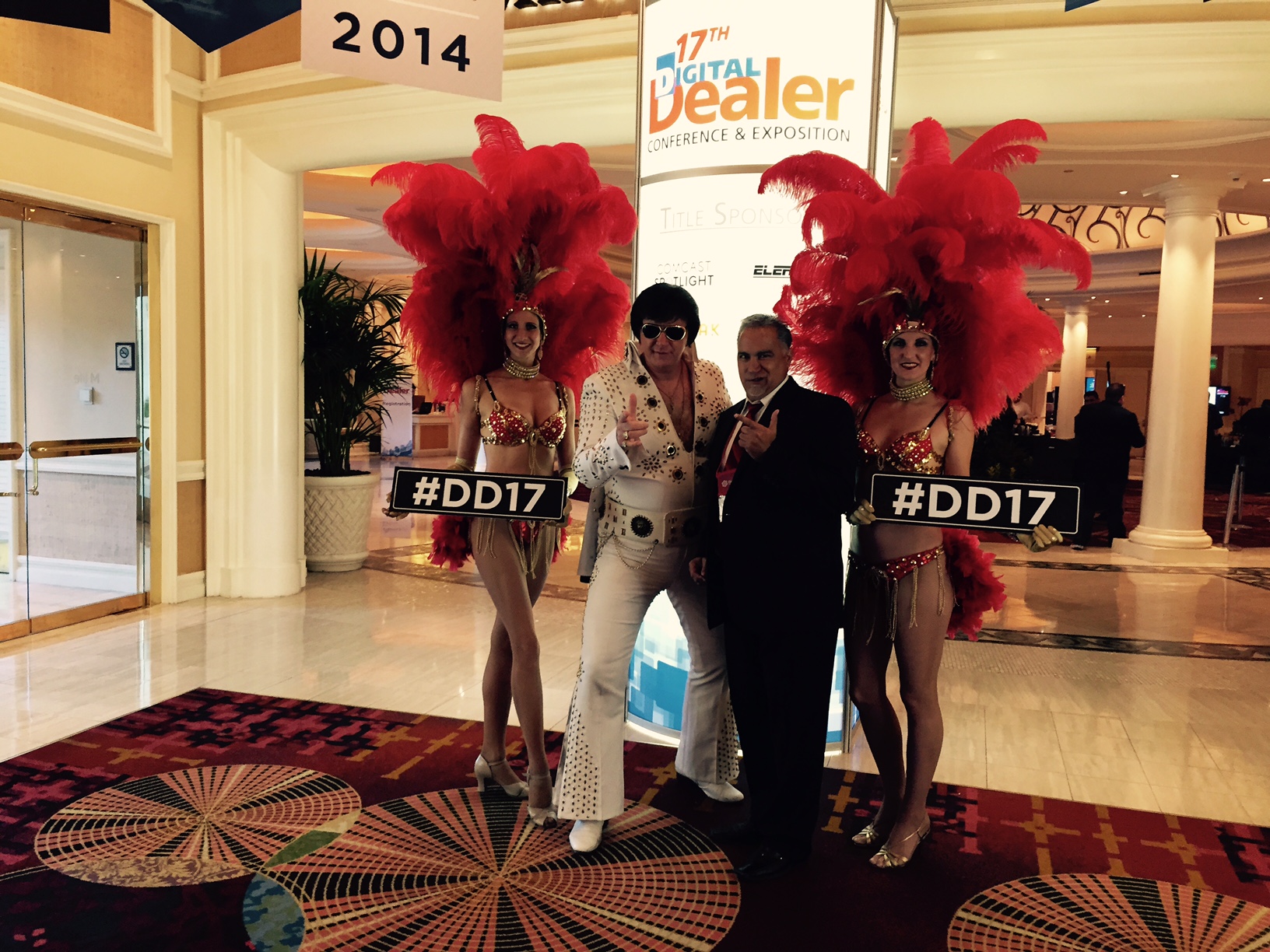
The sun has set on another fantastic Digital Dealer Conference in Las Vegas and we’re extremely grateful to have been able to share our knowledge, expertise and services with the thousands of attendees. As usual, the Mirage Hotel was a great venue. The team at Digital Dealer did an excellent job managing the event with new ideas designed to facilitate operations, and unexpected surprises designed to welcome attendees. Elvis & a couple showgirls awaited registering dealers in the foyer. Of course, our VP of Sales, Tim James, couldn’t pass up the opportunity to get a quick picture.

FullSizeRender3

Flick Fusion was fortunate enough to kick off the show with Tim’s session “Video Marketing Tips, Trends & Practical Uses.” A packed room of attendees learned about the importance of having a video marketing strategy, along with multiple ways to implement one. As Tim polled the audience to see who was taking real video of their inventory, those who weren’t received a wake-up call! The interactive session saw a lot of questions regarding how dealers could start and attendees left with a better understanding of the importance of video marketing in today’s world.

FullSizeRender

During exhibit hall hours, the Flick Fusion booth was continuously filled with dealers interested in hearing about our suite of products, including our latest offerings, VidMail and Timeline Marketing. We saw hundreds of dealers over the course of the show and some were so impressed that they signed up on the spot. Our Samsung Galaxy camera giveaway was a big hit especially when we demonstrated how easy it was to utilize this technology in their video marketing.

IMG_1706

The week culminated in our VIP party co-sponsored by our friends at LiveEvent Stream Automotive. We sincerely enjoyed hosting the many dealers who attended and had an excellent time networking with old and new friends alike.

IMG_2870.JPG

Thanks to everyone at Digital Dealer who helped organize another excellent show. And to all of the dealers who came to see us. See you in Tampa for the next Digital Dealer Conference!

In Marketing, New Trumps Used Every Time

by Brian Cox

Bob visits a website searching for a new vehicle. As he filters down to the model he is considering, he is confronted with a seemingly endless list of stock photos with similar prices. Frustrated at the lack of information, he leaves and attempts his search on another site just to get the same results.

Suzy is in the market for a used vehicle. After comparing vehicles by prices and mileage, she finds one that fits her needs and her budget. The vehicle doesn’t have a very good description, however, and she has questions about the vehicle’s condition. She fills out the form and asks for more pictures of the vehicle. All she gets in return are repeated invites to schedule an appointment while being bombarded with phone calls from salespeople.

Joe is shopping for a new vehicle also. Joe is a very meticulous person. His house is always in order. His DVDs are alphabetized. He refuses to buy anything used. He knows that he wants the new Mustang. He also knows that he wants it to have as few miles as possible and, if feasible, to never have even been test-driven. He visits his local dealer’s website and all he sees are stock photos. He resigns himself to the fact that he is going to have to physically go to the dealership and inspect vehicles, which he does not have time for.

In all of these situations, the online shopper could have converted to a lead or sale. The friction point that stopped the customer from converting was very simple – lack of information. Humans are all different in their peculiarities, but do have one thing in common; they want to get the best value for their dollar. Had any of these dealerships taken the time to enhance their VDPs with dozens of photos and videos, these shoppers may have taken the next step towards the sale. Instead, they are left with frustration and no information.

Imagine if, while searching, Bob had encountered a listing that had actual images or video of a real vehicle in stock at a dealership. Or if Suzy had seen a video walkaround of the used vehicle that caught her eye. Maybe actual images and video of a specific new Mustang would have allayed Joe’s concerns of its condition and he would have reached out to the dealer to start the buying process.

Sadly, many dealers fall short of what is optimum – they have their DMS push out their inventory the instant it’s stocked and then distribute it to all of the touchpoints a consumer may visit. When a consumer finds that vehicle they are poorly served and presented with a VDP that has no description, images or video, and sometimes not even a price.

Most dealers recognize the impact that great image and video marketing can bring to their used vehicle inventory marketing. They know that the faster they get those images and video onto their VDPs, the faster they will see interest by consumers, and the faster vehicles will sell. The one thing that most of the automotive industry neglects, however, also happens to be the thing they have the most of: new cars. Perhaps dealers feel that there is no point taking pictures and video of each individual new vehicle as they are all the same at every dealer. The fact is that marketing your new vehicles may prove to be more important than marketing your used vehicles.

Including images and video of actual vehicles will make you stand out from your competitors in search results on the many consumer touchpoints.

Most dealers have 4-5 new cars for every single used car in inventory. Chances are that your competitor isn’t taking pictures or video of their new cars either. We all know the value SEO has in gaining new customers. By marketing your new vehicles with descriptions, images and video, you stand out from your competitors and increase your content within search engines by 4-5 times! This could easily help you dominate search engine results and every other touchpoint a consumer visits.

If you are not shooting photos and video of your new car inventory, you essentially have no marketing for the largest segment of your inventory. Start taking pictures and video of your new vehicles and you’ll achieve maximum exposure, which will lead to more leads and, ultimately, more sales.

How to Tame the Bull Named Facebook

by Tim James

In 1991, a 5’2” 125-pound cowboy stared into the face of Wolfman Skoal. a young 2,000-pound bull with a bad reputation. So bad, in fact, that a $500 bounty existed for any rider that could tame the beast and ride a full 8 seconds. Wade Leslie accepted the challenge. As he mounted the bull in preparation for his ride, the bull promptly lay down in the pen. He considered getting off. But then the bull’s owner reassured him that Wolfman Skoal would perform. Sure enough, once the gates opened, the bull leapt straight into the air like a rocket and preceded to do its best to eject Wade. Wade had different plans, however. He not only succeeded in riding Wolfman Skoal for the full 8 seconds, but also became the first, and to date, only bull rider to score a perfect 100 points in the Professional Rodeo Cowboys Association.

Not unlike bull riding, marketers are constantly creating content that is competing with both their competitors and the platform on which that content is published. Right now, the biggest and baddest bull around is Facebook. One could say that as Facebook grows up, its personality continually changes, forcing marketers to continuously change with them. As it finally enters its teens, this 10-year old has decided that, at the moment, it happens to like video content. In bull riding, judges calculate a score for both the rider and the bull. Riders know that their score depends on both how they ride and how their bull performs. A rider can stay on a bull for the full 8 seconds. But if the bull isn’t rowdy enough to impress the judges, the rider can still receive a sub-par score. Keep this in mind when developing your content. In marketing, the success of your content starts with the content creator (the rider) and is dependent on Facebook (the bull).

In early summer of 2014, Facebook began releasing in-depth data on video performance. Social media resource Socialbakers eagerly dove into that data in an effort to tame the bull and finally give marketers information that would assist them in their quest for video marketing success. Through the study of 1,000 Facebook pages containing over 3,000 videos, it was found that videos of ~21 seconds long were the most successful. The main metric used to determine a video’s success was its completion rate (i.e.: the percentage of people who watched at least 95% of a video). As in most rules, there are exceptions, yet the in-depth study showed that the longer a video was, the lower the completion rate.

There are many variables that can be used to explain this phenomenon, ranging from attention spans in general, content that’s not engaging, and the bandwidth needed to view a longer video on mobile devices. Not enough time has passed since the release of this data for more comprehensive studies to be done. One thing is certain, however, and that is that Facebook is increasingly choosing to deliver video content to its users’ newsfeeds. The study of Facebook video performance found that ~57% of viewers who started watching a video, completed the video. The Socialbakers study even went as far as to make a preliminary finding that “If this data holds true, Facebook videos are outperforming YouTube videos.” They speculate that the reason for this “could be attributed to more intelligent distribution of videos on Facebook, due to Facebook’s News Feed algorithm doing a better job of matching interested users with engaging videos than YouTube does.”

Keep in mind that these statistics are based on a preliminary study of Facebook video content in general. We’ve found that the money spot for completion rates on videos are between 1-1/2 to 2 minutes long across all other video platforms. The reason for this is that product videos tend to be sought out by a consumer rather than being delivered to them by the platform. We expect that this will remain consistent, as consumers who visit a dealership’s Facebook page to view an inventory video have purposely sought out this content. Consumers looking to purchase a vehicle are willing to make a longer time investment for the simple reason that it is directly tied to a significant expense. Mobile users are statistically willing to make even longer commitments ranging from 2-1/2 to 4 minutes depending on the device.

Any type of content produced by a business has a limited amount of time to capture a person’s attention. Video content has an advantage in that it is the only content that tells a viewer exactly how much of a time commitment they have to by displaying its total viewing length. And if your content is engaging, consumers will give you more of their time. If not, you’ll find them abandoning your message quicker than a bull can throw a rider.

The next time you create video content and stare the bull named Facebook in the eye as you prepare to either submit or be submitted, keep in mind the following: high quality, engaging video content that quickly captures a viewer’s attention will increase the length of time that you’re able to stay on the bull and impress the judges. And just like bull riding, they are the only people that matter.