video

To Script or Not to Script? That Is the Question

When making videos for your dealership, it can be easy to get so caught up in the “What should I say?” that the video never gets made.

Some video marketing experts advise that scripts are the way to go as the person on camera then knows what to say. But that may not be best for everyone.

The person that is making the video, doing the talking and/or the subject of the video, ultimately is representing the dealership. Of course, everyone wants their videos to be professional. But you should also want them to be genuine (sincere) and engaging to the customer. Have you ever seen a video where the person speaks in a monotone or without emotion because they are reading from a script? It’s not very engaging, is it?

To that point, in this blog, I’d like to cover a couple of best practices that can help when executing different types of videos for your dealership that will more effectively engage your customers.

1. Walkaround videos – Whether for general merchandising or personalized emails, it is essential to be knowledgeable about the vehicle. Managers expect that their salespeople know their product. If your salesperson has to read a window sticker to do a walkaround in person, that certainly is not acceptable.

Well, the same holds true for video walkarounds. Customers get excited about vehicles when the salesperson is excited. If a salesperson can knowledgeably explain to a customer while emotionally engaged why a vehicle is excellent and/or why it’s right for the customer, the customer is much more likely to trust and engage with the salesperson. This is especially important when a customer is still in the “Is this vehicle right for me?” stage. If a salesperson can’t correctly show a car without a script, they should not be showing cars period — much less doing walkaround videos.

2. Personal email videos – The whole purpose of a personal email video is to convince a customer who inquired about the vehicle that your dealership cares about them on an individual level and that they should do business with you. Scripted videos can take the personality out of the equation, come off as dry and uninteresting. Ultimately, they could even be counterproductive to the primary goal – getting the customer to like the salesperson or BDC agent.

While it is OK to train employees on what they should say in general, to engage the customer, employees must be able to take those basic talking points and integrate them into the message using their personality. Just as customers can tell whether an email response is a template or an actual communication from a person, customers can also determine if a video response is genuine or just someone reading from a script.

It is definitely okay to write your thoughts down on paper and organize your thoughts to prepare for your personalized video. But when the camera starts rolling, put the script down, make eye contact with the camera, and let your personality shine.

Ensure that your salespeople and BDC agents are knowledgeable enough to make personal videos for customers without having to read a script. They should display who they are and showcase their own individual skills and personality. Customers will be more engaged, the message will come across as genuine and, ultimately, your dealership will see more success.


The Bird Is the Word

One of the reasons video captures your customers’ attention and engages them so effectively is that, when done properly, it tells a story. I came across a great article on AdWeek.com, which shares how the scooter company Bird created a clever video telling a powerful story. It’s not overtly promotional or in your face but instead has some key factors which make it so engaging.

First, it’s story-based. As in any story, it begins with character development, introduces pain points and then provides a solution. When you watch the short video, you see a street line painter endure multiple obstacles while trying to do his job. From traffic congestion, to exhaust, his life is frustrating. Then commuters riding Bird scooters enter the scene. He recognizes they would alleviate the obstacles and decides to take steps to solve the problem.

This illustrates the key factors which should be used when telling a story via video. You don’t have to create an animated masterpiece to convey your dealership’s (or your) story effectively. If you keep the essential elements of storytelling in mind when planning video content for your customers (or potential customers), they will end up more engaged. This translates into a desire to do business with you.

Video content is not all about selling. Sure, you should have videos of your inventory on your VDPs; send out personalized video email responses; communicate with customers via live video and have “Meet the Team” videos so customers can learn more about your dealership’s most valuable asset – your people. But, depending on where the customer is in the sales cycle, some types of videos work better than others.

Video works because customers feel included. When it comes to live video, customers know you are addressing them directly, and they can talk to you in real-time from the comfort of their home. However, even personal video responses can elicit a similar emotional connection. If done correctly, the customer can see that the salesperson is responding to them personally, rather than merely communicating via a generic email template. That personalization, combined with the critical factors of storytelling, not only engages your customer but builds rapport and stimulates emotion.

Here are some quick tips on how to do this:

Regardless of if it is a live video or a personalized pre-recorded video, the structure is the same. Introduce yourself, acknowledge the consumer by name, reaffirm the vehicle they are interested in and then walk them through key factors, identifying pain points by choosing appropriate stories. “Mr. Customer, my name is Bob, and I have been working with Toyota of Mars for 5 years. I’ve helped many customers find and secure vehicles that meet their needs and their budgets. [character development]. I realize that you’re concerned about safety. It’s certainly something that is a concern. Not all drivers are patient, follow the rules of the road and are aware of their fellow drivers.” [pain point addressed] This 2018 Toyota which you inquired about is an excellent choice. It has many safety features, including… [solution addressed].” Then finish the video with a clear call to action expressing what action you would like the viewer to take next and why they should take it.

Adding a touch of storytelling elements to your video content can transform an ordinary video into an engaging and emotional piece that captures and keeps your customer’s attention. More importantly, it separates you from your competition by personalizing that interaction and creating an experience that goes far beyond a simple walk-around or introduction video… and that’s how you get their attention —- and keep it!

Five Videos Every Service Department Needs

by Tim James

As more dealers turn to fixed ops to grow profits, it’s important not to overlook the power of video. Video is a great tool for building customer trust because it allows you to address the perception that dealerships charge too much or try to sell customers unnecessary repairs.

An effective video marketing strategy for your service department includes the following five videos:

1) Value Proposition. This video answers the “why trust us?” question. Many customers are afraid if they bring their vehicle into a dealership service department, the repair will be expensive or they will be taken advantage of.

In this video, address your customers’ fears by featuring friendly service personnel, focus on how your technicians are trained, the quality of your repair work and most of all, emphasize your trustworthiness. Be certain to mention any awards you’ve won and your positive BBB Rating.

2) Service Department Testimonials. Identify several of your most loyal service customers and offer them an extra perk like a free loaner car or free oil change if they agree to make a customer testimonial video.

Before shooting the video, prompt your customer to talk about how long they’ve been servicing with you, what they like about your service department and to comment on the quality of the repair work.

3) Service Personnel Introduction. Similar in tone to a value proposition video, this video introduces the service manager, service advisors and technicians to customers. People choose to do business with people they like, so create videos that display the likeability of your manager, advisers and technicians. Don’t be afraid to brag about their years of experience and awards they’ve won.

4) Service Department “How To.” Select a dozen of your most common and profitable services. Create videos that talk about why these services are important for the health of the vehicle and customer safety. Show a quick tutorial of the work involved with the repair. Discuss the costs of parts and the estimated amount of time it takes to complete the service. The purpose of these videos is to educate customers so they feel more confident they are making the right decision to get the repair work done.

5) Recommended Repairs. When customers drop their cars off for a scheduled repair, one of their biggest fears is an unnecessary upsell. Unfortunately this fear can create resistance to any repair recommendations. A short video created by the service adviser can help to alleviate this fear and provide visual proof that a repair is really needed.

Videos are far more effective at doing this than photos because the service adviser can explain how the old part is worn and compare it to the new part, along with an explanation of how important it is to get the repair done now.

Additionally, advisers can mention the potential impact and cost of related problems that could be caused by not completing the service now.

Recommended repair videos don’t have to be professional. Just use your smartphone with an app that allows you to text the video to the customer. Another option is to have a live streaming video call where the service advisor can show the worn part and explain the repair while talking to the customer live on their smartphone.

All service department videos (with the exception of recommended repair videos) should be featured on your dealership’s website. Additionally, these videos can be used in email campaigns, uploaded to your YouTube channel, featured on your social media profiles and used in digital advertising campaigns.

To get started, find a reputable video marketing host and hire a professional video crew (or find one among your employees). Service department videos are an inexpensive and highly effective way to build customer trust and give your dealerships a competitive edge.

Body Language Is Important…But Even More So In Digital Marketing

Interpreting meaning through communication can be hard.

For example, the simple statement “Fine.”

What does that word really mean? Ultimately, it depends on the context and, more importantly, how it’s said and the body language which happens in that exact moment.

When your significant other says “fine,” you darn well better know what it means, or you can be in a whole world of trouble! Or, if you tell a teenager they must clean their room before they can go out with friends, play video games or whatever they want, there are many ways fine” can be expressed. If they say it loudly while slamming the door in your face, that has a much different meaning than if they say it in a low submissive but agreeable way.

Humans are masters of perception. We all communicate, and that communication comes across in different ways be it vocal, physical, or via some activity.

But what does all this mean as far as your dealership and communicating with your customers?

As marketers, with all the data available to us today, we can better interpret customer interactions and more effectively communicate with them than ever before.

An argument could be made that a customer’s digital activity can tell us more about their intent than a face-to-face conversation. Ultimately, the digital footprints a customer leaves throughout their car buying journey are, in fact, a conversation. You may not be able to see the customer, but they express their intent through their online activities.

That customer looking at your website and bouncing through your entire used car inventory, who also jumped around on third-party listing sites, is much higher in the sales funnel. They are having a conversation with you. Something along the lines of, “I’m in the market for a car but I don’t know what I want.”

A customer visiting your website, viewing every Honda Civic in stock, is not only telling you they want a Honda Civic but, if you want to get granular, also which trim level, price range and mileage restrictions they value.

Whatever they spend the most time viewing is probably the best fit for what they are searching for. An unlimited amount of data is out there to help you identify, define and motivate customers. You must just take the time to look at it.

Now that you know the customer’s intent, where they are in the funnel and what they are interested in, what’s the best way to communicate with them?

VIDEO!

While you have the secret-agent advantage of all this relevant data showing the customer’s intent, the customer still wants good old face-to-face interaction when it comes down to the sales process. Simply sending a templated email accomplishes nothing. It’s not personal, is not directed to them, fails to really interact on an emotional level, and usually has little relevance.

Of course, you “could” take the creepy road and tell them everything you know about them but that would likely be counterproductive.

The best way to engage a customer is through a personalized video response. They can see you, hear you and read your body language. If you’re sincere, friendly and engaging, and use the data you have about the customer’s digital journey to craft a personal response, the customer will be able to relate; rapport will be established infinitely better than any “Buy from us because we love you” e-mail template.

Don’t be afraid to send video email responses to your customers. Most of your competitors simply send those canned templates from their CRM with ZERO impact – if they even make it through the customer’s spam filter.

Make an impression and win business using technology that allows you to interact with customers the same way business has been won for decades… in person. With video you can now interact in person, without the customer even being in your showroom.

The statistics show that customers respond to video. They can read your personality and intentions more clearly via video than a written communication, because emotions are more clearly illustrated. And, more importantly, as a result they will connect with you better and choose your dealership to buy or service their car. Then everything will be just “fine!”

Don’t Let Your Dealership Become a Casualty of War

by Tim James

Amazon and Google are engaged in a war. Both produce proprietary hardware that consumers can purchase and use to access content through various means — and the competition is getting vicious.

I recognize that, in terms of video marketing hosting platforms, YouTube is the 800-pound gorilla — it certainly has large market share in terms of search and users. But recently, YouTube chose to engage in a battle with Amazon that threatens the usefulness of their platform. Why? Well, as consumers have grown used to accessing YouTube in different manners – via mobile phone, browser, connected device or streaming hardware – they now simply expect the same access, regardless of where they choose to access that video content.

Why should dealers care?

As in all marketing, dealerships should expect to benefit from the fruits of their labors. While technology has made the path of entry to different solutions easier, as a dealer, it still takes time and effort to create your content and messages.

When it comes to video marketing specifically, regardless of whether you are shooting video on smartphones, or have an elaborate professional setup, most of you probably still make the effort because you realize the value and exposure video content brings.

But, what if you do all the work and miss out on customers because companies don’t like each other?

Ah… the million-dollar question. I’m sure you’ve heard the expression “You get what you pay for,” right? Yes, YouTube is highly popular with dealers in the video marketing arena, for good reason. They are the 2nd largest search engine in existence and, more importantly, they are free.

Um, but hold on a sec… are they really, free????

What happens when a customer searching for vehicles gets blocked from watching that video you made of your inventory? What about when they get an “Access Denied” message when trying to watch that personal video response you made for them? Any of these scenarios could cost you a sale, which costs you money. Not so free then, right?Well, that ease of access is no longer the case, and it could get worse. What am I talking about?

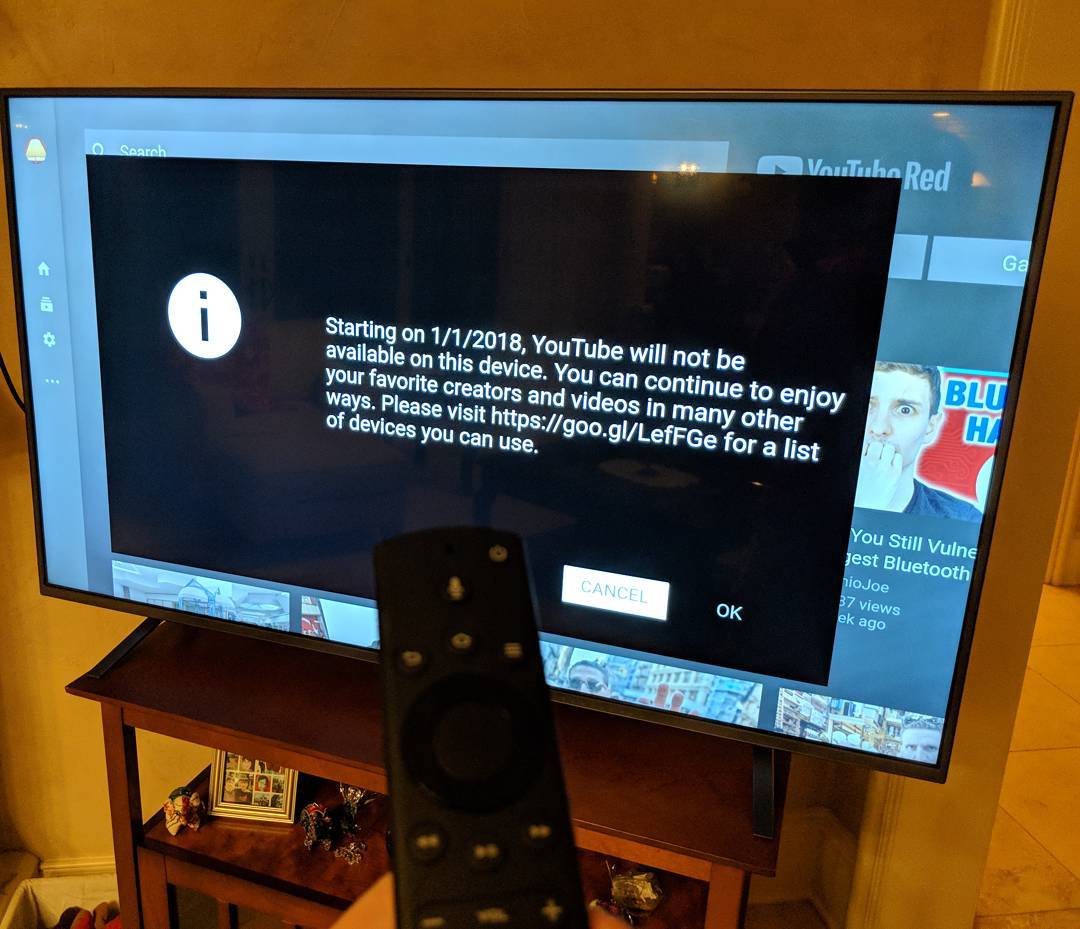
First, in October 2015, Amazon pulled Google Chromecast and Apple TV from its inventory and no longer offered it for Amazon customers to purchase, presumably to encourage use of its own Fire Stick product as a streaming solution.

Then, Amazon expanded its voice-activated hardware, Echo, to include the Echo Show, which includes a screen and video capabilities. At first, YouTube was available on this hardware. But soon after its debut, YouTube pulled access from the Echo Show because of how Amazon implemented it, which excluded some features.

Moving on forward, just last month, YouTube again appeared on the Echo Show, prompting many to believe that the companies had made up. However, apparently that was not the case. According to TechCrunch, Amazon simply developed a workaround to allow Echo Show users to access a web version of YouTube without Google’s knowledge.

Next, on the 5th of December, Google once again blocked Echo Show users from accessing YouTube content.  And it doesn’t seem like this battle is anywhere near the end.

On top of that, consider the data deficiencies, CRM integration or other workarounds staff go through to integrate inventory, or personalized video messages to your customers. The mere fact that videos hosted on the YouTube video platform could NEVER BE SEEN, even by those who TRY TO VIEW THEM on what’s arguably the most patronized company on the planet (Amazon), should concern dealers.

Neither Amazon (who is making inroads into selling cars on their website) nor Google particularly care about car dealers. There is much more revenue to be had in the marketing ad revenue world, as well as the cable-cutting trend that led them into the hardware business — and Amazon is working on coming after a share of the pie that Google has carved out.

As the war between the two companies’ heats up, avoid becoming collateral damage and consider the hidden costs associated with hosting your video on these platforms. “Free” isn’t always free. Make sure you have a video marketing platform that protects YOUR interests. Ensure that those valuable, time-sensitive messages are delivered and can be viewed by your customers, and remove yourself from the battlefield.