strategy

Will You Be There Whenever Your Customers Need You?

In video marketing, many people think that to simply start making videos is enough. While it’s certainly a great start, there’s actually a lot more to it. In fact, I’d even go so far to say that simply beginning to make video at your dealership is more like showing up for your first day of football practice. The coach didn’t simply split everyone into two teams and have a game — chances are good that you did a whole bunch of running, pushups and other physical exercise until you threw up. You may have even done this twice a day — in the summer — and who knows how long it was before you actually — wait for it — touched a football! Do you think this practice, which happens every year on countless high school, college and professional football fields across the world doesn’t work? Of course it does. The point is that to be effective at the game, you must be in shape AND know the game plan!

I talk all of the time about the importance of having a strategy in your video marketing. That strategy includes multiple pieces — only one of which is actually picking up a camera and taking video. You have to know the game plan for the video before you can ever make an effective one. Just like you need to know where your wide receiver will be before you throw the football.

An article by ThinkwithGoogle.com perfectly captures this strategy. The article discusses micro-moments and describes them as Want-to-Know moments. Want-to-go moments. Want-to-do moments and Want-to-buy moments. These are the critical opportunities for brands and, according to the article, are the new battleground. In these moments consumers take immediate action, demand quality, relevance and usefulness. And will give their business to the brands that accomplish this the best.

So, what’s the strategy they recommend brands follow to win with consumers?

  1. Make a moments map. This means to simply identify the set of moments that your customer’s have in their journey. In a study released earlier this year by Google’s Automotive Division, the magic 5 moments are – which car is best, is it right for me, can I afford it, where should I buy it, and am I getting a deal. Keep in mind that these are only the buying moments. There are plenty of other moments. The buying journey is only one journey that leads them to your dealership. Service is another.
  2. Understand customer needs in-the-moment. While this is very basic, it is also one of the most important parts of the strategy. Put yourself in the customer’s shoes at each phase that you identified in your moments map and ask yourself what they want to know or what would be most helpful. Remember that to win the game, you need to provide quality and relevance. And, above all, be useful!
  3. Use context to deliver the right experience. Wherever possible, integrate context through geo-location or time of day to deliver experiences that feel as if your message was made just for them.
  4. Optimize across the journey. It is important to have a presence at each phase of the customer’s journey. And also ensure that your content is optimized for whatever device they are on. It’s very possible that one moment is visited on a mobile device, while the customer may continue their journey on a desktop. Make sure that wherever they are, your video content is optimized to deliver the best customer experience.
  5. Measure every moment that matters. This is one of the most important things in any marketing strategy, not just video. Inability to measure the successes (or failures) in your activities will inhibit you from discovering what actually works and will prevent you from increasing your effectiveness.

Don’t let the term micro-moments distract you. Each of these phases in the customer journey have always existed. The difference is that now almost everyone has the ability to access this information instantly from anywhere. So, the timelines have decreased exponentially. While it could take one customer months to get from the beginning of their journey to your dealership, it could very easily take another customer minutes to navigate through their whole journey.

Once you’ve created a strategy, the two-a-days are over. Now let’s pick up that camera and play some football!


A Primer on Video E-Mail Response

So, you’ve decided that you want to send video responses to internet leads, but you don’t quite know where to begin. Well, first, congratulations! You have made an excellent decision that will engage more of your customers, build rapport faster and elicit increased responses. Now to the nuts and bolts of how best to do this:

Technology – The simplest tool you need to create video is probably right in the palm of your hands. You may even be reading this blog on it, right this minute. I’m talking about your phone. These days, most smart phones have pretty impressive video capabilities. On the other hand, perhaps your dealership is willing to invest in a little dedicated video equipment. That is great as well. The biggest thing to understand is, regardless of whether you’re shooting video from your smartphone, or from an expensive camera, you need to ensure that you’re familiar with all of the settings that the camera offers and how to use them. Read your manual. And, In the case of an expensive camera, pay attention primarily to the Exposure Triangle (ISO, Aperture and shutter speed). Understanding these three features, and how to manipulate them, will help you produce great looking quality videos.

Deliverability – I am frequently asked about the best way to deliver videos to a customer via e-mail. Should the video be embedded in the e-mail or linked? Well, embedding a video inside an email sounds cool. But, “sounds cool” isn’t functional because only a few e-mail clients would actually play the embedded video. In addition, many spam filters flag e-mails that contain embedded video as spam. This means that most of your customers won’t even see them. A video is worthless if it doesn’t make it through spam filters. Because of this, your best option is to utilize a video landing page and insert a link to the video which is embedded in the landing page.

Creativity – Creativity is an important piece of any video marketing strategy. First, decide how you are going to utilize your video content. Are you going to build a library of stock video responses to send to leads? Or, are you going to personalize each one? Perhaps a combination of the two? Regardless of which strategy you choose, there are advantages and disadvantages to each. That being said, each one can be effective if it is implemented properly.  Here are some fundamentals that apply universally:

  • Use the word “VIDEO” in the subject line.
  • Use e-mail to support your phone call strategy, not replace it.
  • The focus (i.e. the call-to-action) of the video should be to get the customer to call you.
  • SMILE! There is nothing worse than seeing a video with an unhappy face.
  • Use a video landing page that contains the video you created for the customer along with additional supporting videos such as your dealership’s value proposition video, your salesperson’s introduction video and perhaps even some video customer testimonials. Sell the dealership. Sell yourself. And sell the car. All at the same time.

Hosting – One of the most important pieces of the puzzle for an effective video marketing strategy is where your video is “hosted.” All of your video content, including your video e-mails, should be hosted on the same platform so that you can track the viewing data of your shoppers across all touch-points and match that shopper with their history within your CRM. This also allows you to deliver “viewer specific” content to your shoppers based on their history and/or geo-location. Hosting videos on the same platform allows you to see if the prospect you sent the video email to watches another one of your videos on your website, cars.com, AutoTrader, Facebook Video pages, a blog, through another e-mail, etc.

Make certain that your video hosting platform knows what it is doing and can serve up real-time marketing/re-marketing content, or special offers, all based on rules that you can set, in order to return the best results. You can even geo-target your competitor’s lot. This means that if a specific shopper ends up visiting your competitor, but then decides to come back and watch your video e-mail just one more time (or any of your videos for that matter), you then receive a notice that they are on your competitor’s lot, while your video throws up a last chance offer to entice them over to you, before they buy elsewhere.

I hope this blog provides some useful data on the fundamentals of implementing an effective video marketing strategy. With the right tools and technology, you’ll find that it’s not that complicated at all.

Use Video to Increase Service Upsell

It’s widely known that video walkarounds, email responses and other types of video attract more attention from car buyers and better engage them once they reach out to you. But, one of the biggest mistake I see most dealerships make is to neglect the service department in their video marketing efforts.

Most importantly, utilizing video in your service department is a key part of a complete Video Marketing Strategy, and an easy way to capture your service customer’s viewer profile (data) to match with your CRM records.  In other words, you can know if your service customer is also watching your inventory videos on touch-points such as AutoTrader or Cars.com, in addition to your own website, Facebook pages, Email Campaigns, Blogs, etc.  You can then leverage this knowledge by sending targeted messages to that service customer that include videos with offers specific to their vehicles of interest, while passing that data to your CRM to queue the customer up for Sales Follow Up. Essentially, the targeted messaging occurs via your existing videos in “real-time,” based off the data gathered from your video views. It’s re-marketing just as you would have through a Google Ad Campaign, except you are using your own videos and your own data.

Video can dramatically increase the service department’s footprint on your website and serve as a useful resource for your customers. It is also an excellent way to educate customers and increase service recommendation acceptance.

When customers drop their cars off for a scheduled repair, one of their biggest fears is an unnecessary upsell. Unfortunately this fear can create resistance to any repair recommendations. A short video created by the service adviser can help to alleviate this fear and provide “visual proof” that a repair is really needed.

Videos are far more effective than photos because the service adviser can explain how the old part is worn and compare it visually to the new part, along with an explanation of how important it is to get the repair done now. Additionally, advisers can mention the potential impact and costs of related problems that could be caused by not completing the service now.

Creating an upsell video simply involves two parts: the “why you need it” and the tutorial. The “why you need it” portion of the video plants the seed in the customer’s head that they had better get this taken care of soon or they are likely to end up with a more expensive repair, stranded on the side of the road, or possibly even in an accident.  The tutorial section shows how much work it really is to fix this issue, the cost of the parts, and the time involved with the fix; thus, justifying the cost of the repair.

Once the upsell video is created, the adviser can text it directly to the customer so they can see the video on their mobile device and make a quick decision. You can remove additional fear and the “oh they’re just trying to up-sell me” mentality from the customer by delivering each video on a landing page that contains your Value Proposition Video, Service Manager Introduction Video, and a couple of Testimonial Videos so that the customer can quickly see that you have their best interest at heart and can be trusted.

If the customer refuses the additional service, send them a “how to” (on the same landing page) so that they can appreciate how serious you believe this service is, and that it needs to be completed ASAP (even if they prefer to do it themselves).  The more you can help the customer understand that this about “their safety” and that you aren’t just trying to sell repairs that aren’t necessary, the more likely the customer will trust you and approve the additional repairs.

These type of videos also create content on your website and increase the odds that your dealership will show up in service related searches (VSEO). You never know when someone searching for an answer will stumble across your service video and make the decision to choose your dealership for their service repair.

For Car Buyers, 5 Is the Magic Number

While the consumer’s car buying journey can include upwards of 24 touchpoints, there are some particular milestone moments in that journey that can define and direct their actions. These moments are covered in a report recently released by Google’s Automotive division, “The 5 Auto Shopping Moments Every Brand Must Own.” The report states that the key moments within a car buyer’s path that every brand must be aware of and present for are:

  1. Which car is best?
  2. Is it right for me?
  3. Can I afford it?
  4. Where should I buy it?
  5. Am I getting a deal?

To truly make an impact on these shoppers throughout each stage of the car buying process, dealers need to have content which appeals to buyers, that makes those buyers desire to take action, and that helps lead them down the road to their dealership. At each stage in the process, dealerships compete for consumer eyeballs. While some dealers will rely on stock information for their vehicle descriptions, others may actually take the time to write custom comments. Some will have a limited number of photos of a vehicle, while others may include 40 or more. The problem is that, to the consumer, every vehicle is almost always one of many in a list that’s typically sorted by price.

So, you can you differentiate your Honda Civic from the thousand others for sale in a market?

Through storytelling.

Statistics show that we remember 20 percent of what we hear; 30 percent of what we see; but a whopping 70 percent of what we both see AND hear. The more of a customer’s attention you can grab, the more likely that YOUR vehicle will catch and hold their attention. Descriptions alone can’t achieve this. You’ll be lucky if they even read the whole thing. And forget about a customer flipping through 40 photos. Chances are that they will browse through a few before abandoning that VDP and moving on to the next one. And the next one may or may not be yours. The only way to maximize your shot at attracting and keeping interest is through a combination of sight and sound – and that’s where video comes in.

Video has the unique power to tell stories. Whether those stories are about the vehicle, the salesperson, the dealership, or a plethora of other topics, no other medium is as powerful.

With video, you can tailor your story to a specific person. Few marketing tools have more influence on a car shopper than a vehicle video walkaround, specifically made for that customer. Think of how much more effective an e-mail response is that contains a personalized video greeting, over the multiple canned email responses they probably receive from your competition.  Consumers aren’t stupid. They realize that these type of e-mails are not authentic responses to their inquiries. Chances are that just about every one they receive from multiple dealers contain very similar messages. Video will give your dealership the edge. The consumer can very quickly see that they have received an authentic response. And that the salesperson, or BDC rep, took the time to make a video specifically for them!

It’s time to up your game. Make an impression that is meaningful, authentic and personalized.

In my session at the 20th Digital Dealer Conference & Exposition, “The Four Best Ways to Use Video: Learn a Video Marketing Strategy that Sells,” I explain just how crucial video marketing is to a dealership’s success. I will also talk about the importance of having an identified, measurable and scalable video marketing strategy. While video content doesn’t have to be difficult to produce, there is certainly more to it than simply running out and buying a camera. Join me in my session and you’ll leave knowing how to leverage the power of video to sell more cars.

How to Use Video to Turn Leads Into Shows

by Tim James

All dealerships get leads that originate from the Internet. Not all dealers, however, are equal when it comes to how they handle these leads. Ever wonder why some dealers are able to close Internet leads at 12+ percent, while others struggle to reach 6 percent? The reason has everything to do with how these leads are handled – from speed of reply to the content in the reply itself.

One of the most powerful ways to communicate to today’s tech savvy customers is with video. It’s a highly effective form of communication because it engages the customer’s senses. It can help capture the customer’s attention and increase the amount of leads that turn into appointments.

There are three basic types of videos that I find work best when created and integrated into any lead follow up system :

  1. Lead Response Videos: When you receive a 3rd party Internet lead, chances are really good that lead also went to multiple other dealerships. This interested buyer then gets bombarded by e-mails and phone calls. Quite frankly, most of these responses are generic, contain no information, aren’t personalized and tend to start looking alike. Gain a competitive edge with your response — rather than simply send a template email, create a personalized video response that thanks the customers for the inquiry. Introduce yourself, mention the vehicle the customer inquired about and invite them in. Your video will stand out and make you the memorable one. Customers will also feel flattered that you took the time to create this video and realize that there is a real person communicating with them, not just a computer.
  1. Appointment Confirmation Videos: When you do get a customer that is interested in test driving a vehicle, it’s important to create a sense of obligation on their part. It’s proven that e-mails that contain videos get opened at a far higher rate than those that do not (especially when the word “video” is in the subject line). Create an appointment confirmation video and you can increase the chance that the customer will open and view it. In addition, use the video to tell them that you’re looking forward to seeing them and make it “personal” so they feel guilty if they blow you off and don’t show up. Let them know that you are doing something “for them” by making sure you have the vehicle cleaned up, pulled around and waiting for them…and offer to have an ice cold bottle of water or a cold Coca Cola waiting for them.
  1. Personalized Walkaround Videos: Nothing is stronger than sending a personalized walkaround video to your customers. The fact that you took the time to video and explain the features and benefits of the specific vehicle they inquired about JUST FOR THEM, can impress them and can also increase their interest level. People appreciate it when others go that extra mile to help them. Make your vehicle AND yourself memorable and you’ll have a better chance of building trust and rapport with your customer and, ultimately, getting them into your dealership.

Give one or two of these a try, I’m confident you’ll be impressed with the increase in the lead to appointment rates and appointment show rates that you receive.

Jameson Irish Whiskey Takes Video Marketing to the Next Level

by Brian Cox

Jameson Irish Whiskey has taken video marketing on Instagram to another level – “the first brand to successfully utilize 3D video for advertisements on Instagram and Facebook,” according to a recent article in the Independent.

The video itself is very simple, and suggests that you slide a shot to your friend. It then proceeds to slide a shot glass of whiskey towards you, the viewer, which then appears to come off the page. It’s rather clever how they were able to create the illusion of 3D on a non-3D platform.


https://instagram.com/p/0LZMCKq-Ys/


According to many studies, brands are increasing their content marketing budgets to include more video marketing. Social media platforms, such as Facebook, Twitter and YouTube, are going to war to become the World’s premier video platforms, something that YouTube has enjoyed for years.

As is the case with any marketing, the ability for advertisers to cut through the noise with video marketing will continue to increase in importance. In addition, marketers should not rely on a single platform to host their videos. Regardless of who ends up winning this battle for viewership, consumers will still have their preferences. Believe it or not, some people still use MySpace, and other platforms that many abandoned long ago. This is why it’s important to ensure that your content is on all of the sites YOUR consumers visit. You never know where your next sale will begin their journey. Bear in mind, however, that to accomplish this you will either need spend a lot of time posting your video to each individual site. Or you can go the route of automation to get it done more efficiently.

Successful video marketing today demands entertaining and creative video that engages your audience. It’s not simply about having video content; it’s having the right video content. That can only be accomplished with a solid strategy that’s executed consistently.

Even a micro-video should have the same concepts behind its creation – creative, outside the box thinking – it should be engaging. What makes these type of videos a success is not any different from the winning formula for any videos — whether it be a “Why Buy from Me,” company culture-type video, or a vehicle walk-around video.

You only have a short period of time to catch and keep a consumer’s attention. Make sure that you use that time wisely and you’ll find an increase in views and conversions.

How A Dog May Have Just Reinvented Pre-Roll Video Ads

by Brian Cox

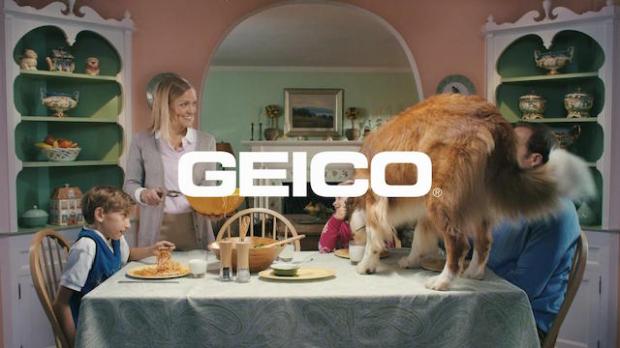
We all know how annoying pre-roll video ads can be – especially when they have nothing to do with the video content we’re about to watch. Many people hover their mouse cursor over the countdown just itching to click “Skip Ad” the second that option is available. As reported by USA Today, the insurance company Geico, may have found a way to keep people around to watch.

In a nutshell, Geico used only the first 5 seconds (the amount of time someone would have to watch before the “Skip Ad” option appears) and stated, “You can’t skip this Geico ad because it’s already over.” In the background a family acts as if they are frozen in time at the dinner table. On screen is a dog that then proceeds to eat everything on the table while the actors stay as frozen as possible (although you can tell that they aren’t). It’s actually very well done and pretty amusing. The trick is that the Geico logo is on screen the whole time so, in essence, you’re watching the whole ad. The article reports that, on March 3, the ad had “logged more than 725,000 unaided YouTube videos in one day.” That’s pretty incredible.

The reason this ad is seeing so much success is simple. It is one that every dealer or marketer should take note of – they had a strategy. The producers of the ad, the Martin Agency, knew they faced the same challenges and had to solve the same problem that every other company utilizing pre-roll video does – How to stop people from clicking “Skip Ad.” Most companies fail this challenge as not many of these pre-roll video ads tempt anyone to stick around and watch.

So, rather than try to answer the question which most marketers have been unable to, they chose to think outside-the-box. With just 5 seconds to convince people not to click “Skip Ad,” rather than putting the meat and potatoes of the ad AFTER those five seconds, (which is how most traditional pre-roll is organized), they chose to put it BEFORE.

Then they got creative…

What would make someone continue to watch an ad – that’s not supposed to be an ad – after the “Skip Ad” option appeared? From the buzz this has generated, it would seem that a dog having a good old time tearing up everyone’s dinner from atop the table was a winning formula.

I suspect that the success of this campaign will cause other companies to start using those five seconds in other creative ways. The important thing to remember is that simply throwing video onto the Internet is not effective – and it’s not video marketing. Without a strategy in place to make your video marketing efforts successful, you may just be wasting your time.

They Watched Your Video. Now What?

by Brian Cox

There’s no doubt that video marketing is exploding in popularity with businesses and consumers. Both Facebook and Twitter are investing heavily in video and, in the case of Facebook, rewarding those who upload their video straight onto its extended reach advertising platform.

The days of reading long text descriptions and features of vehicles on websites are quickly fading. Manufacturers and dealerships are putting more effort and bigger budgets into video marketing. However, no matter how creative, funny, informative or compelling a video is, if it’s missing one simple ingredient, it will not help you sell more of anything – whether that’s a salesperson, the dealership or a car.

What is that simple ingredient? – It’s a call-to-action.

In terms of functionality and conversion, all websites typically contain calls-to-action. Customers that visit a dealership’s website can gather the information they want and, most of the time, there is a call-to-action on the page they’re viewing; be it the home page or a vehicle description page. Many videos, however, have no call-to-action. An online car shopper will visit multiple touchpoints when researching vehicles – Think of all of the sites your videos are on that the consumer could visit. You may control the content and call-to-actions on your own website, but it’s not always the case on every touchpoint.

Many dealers incorporate personalized video e-mail responses and walkarounds and introduce staff on their “About Us” pages. These are all great but, in many cases, they neglect to incorporate the single most important question that a consumer will ask after watching:

What do I do now?

Even if you have a call-to-action on the actual webpage that the consumer is on while watching your video, include a call-to-action within the video itself. It doesn’t have to be long or confusing. It should be simple. Something like:

  1. Call us at XXX-XXX-XXXX or email us today at XXXXXX
  2. Make sure to mention this video to claim your special offer
  3. Make sure to visit our website and get the exclusive Internet pricing only available on our website

If you’re not asking viewers of your video to do SOMETHING at the end of your video, they won’t do ANYTHING and you’ll be missing out on conversions. Guide the consumer through the funnel in relation to the video content they just watched. If the video was a “Why Buy From Me” sent by a salesperson, include their contact information at the end. Another thing that can be very beneficial is to incorporate a call tracking number on your videos.

If it’s a vehicle walkaround video, direct your customers as to what they should do next. Create a video explaining how your dealership assists people with challenged credit then direct them to your online credit application to get started. If you produce service videos, make sure to include an offer, coupon or, at the very least, an invitation to the dealership or to schedule an appointment.

It’s really not a difficult concept. Almost every other form of marketing will have calls-to-action (if they’re any good). So why shouldn’t you also include them in your videos? It’s up to you to tell your customers what you want them to do. If you guide them properly and with relevance, you’ll find that more of them follow the path you’re leading them down and will see more conversions.

Playing to Customer’s Emotions in Marketing Works

by Tim James

I have long preached the fact that including video in your marketing is an effective way to get customers emotionally connected to a specific car on your lot. This visual connection to the senses serves to enhance the appeal of a vehicle to an online shopper. If there was some technology that allowed consumers to touch, feel and smell your car while shopping online, I’d be all in. Unfortunately, the online vehicle shopping touch-points that exist today don’t allow for 4-D shopping; they are currently limited to a flat screen.

So, how about taking your video marketing game to the next level and incorporating marketing messages that play to consumer emotions. This is far from a new marketing tool. In fact, you see it every time you watch television or the latest viral video. Super Bowl commercials are typically prime examples: many are creative, funny and even touching.

Messages that create a sense of urgency, build trust, offer an incentive or some value added benefit, or appeal to some perceived status, are not uncommon in manufacturer and dealership marketing. What’s not as common is seeing a dealership incorporate these emotional triggers into their inventory marketing – at least in a video. Consider how much more effective the use of the techniques would make your inventory videos. You only have a few seconds in which to capture an online car shopper’s attention in your video. If your video captures the customer’s attention quickly through creative messages that play to their emotions, chances are they’ll watch longer. This can build more excitement in your vehicle over other similar vehicles. There’s no doubt that the more emotionally connected a customer is when they submit that lead, the more likely it will result in a sale.

Have fun with your walkarounds. Don’t simply point your video camera or smartphone and walk around the vehicle while describing it in monotone. Excitement is infectious. We use this all of the time when the consumer is on the lot. Keep your videos interesting and transfer your passion and excitement for the vehicle into the video. This will undoubtedly have a stronger effect on the emotions of any customer viewing it.

You don’t even have to be terribly creative (if you aren’t the creative type). Your dealership most likely has already employed an ad and marketing agency to do that. Simply look at the messages already going out to customers via traditional media and incorporate those unique selling propositions into your walkaround. These type of messages can then help sell you and the dealership, not just the vehicle.

Let’s face it; there are probably over 100 shiny vehicles, similar to the one you have online, that an online shopper is viewing. Anything you can do to give your vehicle an edge over the competition will help your vehicle stand out in the customer’s mind. Play to their sense of fun. Build a sense of urgency. Build trust and offer value in your video walkarounds. Step outside-the-box with a little creativity and, I promise you, your vehicles will get more attention and you’ll see more people submitting leads that are farther down the funnel and more emotionally invested. And that can only bring you more sales.

Winning Is Knowing The Rules Better Than Your Competitor

by Brian Cox

On January 11, the New England Patriots faced the Baltimore Ravens in a contest that would dictate which team moved onto the AFC Championship game. Going into the game as heavy favorites to win, the Patriots quickly found themselves losing the game 14-0 quickly. Undeterred, they powered through trading touchdowns with the Ravens for the remainder of the game to ultimately win. The real story that comes out of this win, however, is how the Patriots reached into their bag ‘o tricks to achieve what they had come to – win.

Several players on the Ravens were quoted as follows in an article in the Boston Globe

“They pulled out every trick play in the book” – Chris Canty, Ravens defensive end.

“They couldn’t just drive the ball down on us regular. They had to do something tricky.” – Ladarius Webb, Ravens cornerback.

“You’ve seen one gimmick, you’ve seen them all.” — Terrell Suggs, Ravens linebacker.

And the most profound…

“It’s not something that anybody’s ever done before.” – John Harbaugh, Ravens head coach.

John Harbaugh and the Baltimore Ravens were not just upset that they had lost, but that they had done so because of what they deemed trickery on the part of the Patriots. Their anger, however, was misdirected as the Patriots did nothing wrong, according to the NFL rules.

New England Patriots quarterback, Tom Brady, summed it up best in his reply to their criticisms when he said, “Maybe those guys got to study the rule book and figure it out? We obviously knew what we were doing.”

Patriots coach Bill Belichick did. Any other team in the NFL could have pulled off the plays and formations that the Patriots did which helped them win that game – but nobody ever had. By knowing the rules and using them to his team’s advantage, he was able to throw unexpected plays and confuse his opponents enough to win. On the other side of the field, Baltimore Ravens coach John Harbaugh, was complaining about the rules and how the Patriots won. He was so incensed during the game that he even, literally, cried foul (and got one) when he ran onto the field to argue with officials.

Being successful in business and marketing is no different. Dealerships have so many rules placed on them by so many different regulating bodies, it’s surprising that they can say anything more than “Here is our car. You should buy it.” To win in the automotive industry, you have to be a leader.

Business leaders are creative. They find ways to innovate and do things that their competitors aren’t. They know the rules of the game backwards and forwards. They find strategies and incorporate plays that nobody else does, and then use them to win. Whether that’s winning a new customer, a star employee or simply sales volume, they have thought about all scenarios and crafted strategies to achieve them. There are plenty of books that tell you how to be a successful leader, run a successful business, have success in marketing and hire superstars. Every business has access to those resources. Success lies in not only knowing the rules but in knowing the rules so well that, when you pull out that trick play, your competition doesn’t know what hit them.