automotive

8 Quick & Easy Video Email Marketing Best Practices to Boost your Results

by Tim James, COO

Most consumers have a built-in fear of communicating with automotive sales professionals.  Many of the “new age” automotive retailers are trying to play on this fear by running negative ads that make automotive dealerships (and sales professionals) look like high-pressure evil people.

When a consumer does finally reach out to your dealership, using video content in your initial communications can be your opportunity to show them that they will have a GREAT experience working with you and your dealership. People buy from people they like, and video is the best way to show your potential customers why they should like you. It can be one of the most effective ways to humanize your dealership and establish trust with shoppers. 

Here are some quick tips for making the most of your video email campaigns that will increase your click-through and response rates.

1. Include the Word “Video” in the Subject Line & Avoid SPAM “Trigger Words.”

The simple act of adding “video” to an email subject line can increase open rates by 7% and can improve your click-through rate by 96%. Put it in brackets [VIDEO] at the end or beginning of your subject line to make it clear to your audience. People are more curious to see what is inside your email when it includes video and perceive the information displayed in the video to be more valuable.

In addition, the word “video” can help you avoid SPAM filters, which can be triggered for a variety of reasons, causing your email to skip recipients’ inboxes and land straight in their SPAM box. By avoiding trigger words in your email subject lines, you can dramatically increase your chances of getting beyond SPAM filters.

2. Link to the Video (or video landing page)

Unfortunately, some email providers have not started using the latest technology and this can play a significant role when you select a provider. As several email clients cannot play embedded videos, it can be better to provide a link to your video or landing page, rather than embedding it in your email.

3. Place Video Below the Email Message

Adding videos into your email will boost open rates but don’t let the video distract from your main message. An engaged audience will drop what they’re doing to watch a new video, so be sure to add it at the end of the email. By so doing, consumers will read your brief message before watching the video. Keep the text message above the video brief, as the main focus of the email should be the video.

4 Do not Send an Image Only Email

Do not send an image only email, and do not say too much in your email either. Video emails that keep it short and to the point with a word count of 50 words or less receive up to a 52% higher response rate than the same video sent with a long wordy message. 

5. Include a Call to Action

All forms of digital marketing should invite the audience to do something specific, especially when it comes to an unsolicited email or text. Make sure your videos in your emails offer value for the customer and include that critical CTA. The whole point of any message sent to a consumer is to lead them on the path that you want them to follow. Make sure the CTA is easy to understand and clearly directs them. Then ensure you take them where you promised.

6. Be Professional.

Include some basic best practices when taking your video. Have good lighting and a clean and pleasant space to stage your video. It is best to turn your phone to the side and capture the video in landscape mode. And be friendly and enthusiastic in the video (Smile).

7. Have a Variety of Video Content On Your Landing Page.

Now that the consumer has engaged with your email to watch your video message, this is the perfect opportunity for you to provide them with easy access to additional video content that really shows them that “YOU are the good guys,” and they can trust you. Rather than making the consumer search for “where should I buy it” content later in the buying cycle, present it to them now. Move the consumer along in YOUR buying cycle by including Value Proposition, Testimonial, a Personal Introduction, additional Inventory, Promotional, and New Model Test Drive videos on the same landing page as your initial video message. Let the shopper know that they can LIKE and TRUST both you and your dealership before they’ve even decided which vehicle they want to purchase.

8. Leverage The Shopper’s Data

A large number of consumers can disappear after your initial contact with them. How many times have you wondered what happened to that person that you just spoke to (who isn’t calling you back or answering your emails now)? Using a hosting company for your videos that offers detailed insights and data can make it easier to track your video success rates while allowing you to track the actions consumers take. Also, using the right video host can allow you to receive real-time notifications when your other video content (such as your inventory videos) are viewed by these same consumers. This gives you greater insight into which of your leads are still in the market and actively shopping on your website (or the popular marketplaces like AutoTrader, Cars.com, etc.), and provides you with a notification the second that they click to watch your inventory videos on these touch-points, allowing you to follow up with them at the most relevant time.

Video in email is no longer some gimmick. Consumers consistently state that video is their preference. Video has fast become a key factor in running more effective email campaigns. Adding video will breathe new life into your email marketing and is an engaging way to bring compelling content to shoppers, resulting in more appointments for your BDC and sales teams, more up-sell of recommended services for your service department, and higher CSI Scores across your entire store.

3 Hot Video Trends for 2021

By Brian Cox, president, Flick Fusion

The practice of using inventory videos to better merchandise and market vehicles is nothing new. Many dealers are old pros at using inventory videos to engage and convert more car shoppers into leads—not just on their website Vehicle Details Pages (VDPs) but across multiple channels and touchpoints.

While inventory videos form the basis of a sound video marketing strategy for dealers, there are many more ways to connect with customers and leads using video. In this article I’ll discuss three of the hottest video trends and how dealerships can incorporate these trends into their video marketing strategy.

Live Video Calling

When COVID-19 hit, video conferencing stocks soared. Almost overnight, live video calling became mainstream. Consumers not only enjoy video calling, they have come to expect it! Is your dealership meeting their expectations?

Have your sales team use a video calling app to perform live vehicle walkarounds with leads. Choose an app that can be used cross-platform and on any device. Live video calls are ideal for establishing rapport and building trust with customers, while answering all of their questions in real time.

In the service department, advisors and techs can live stream video calls to show customers worn-down parts that need to be replaced or repaired. Providing that visual proof to customers helps to increase service recommendation approvals. 

Interactive Videos

Interactive videos are fun, immersive and highly engaging because they put car shoppers firmly in control of their own viewing experience. Interactive presentations are ideal for taking your vehicle merchandising to the next level. The vehicle is showcased in a video with clickable “hotspots” that pop up to reveal detailed information to viewers, so they can learn more about features they’re interested in.

In various studies, interactive videos are proven to increase time on websites, increase recall of content and increase purchase intent. Interactive videos are a great way to make your inventory stand out from competition on third-party auto shopping sites and on your social media channels!

Personalized Videos

Your marketing vendor is probably pushing you to do more personalized campaigns, with good reason. Consumers love marketing that’s catered just to them!

Dealerships can use personalized videos in several ways. When responding to a lead, don’t just send a generic inventory video. Personalize it by recording a new, customized voice track over the existing video. Use the customer’s name, answer their questions and tell them why the vehicle would be a good fit for them.

Video technology also exists that allows you to insert a “video inside a video.” The salesperson uses their computer camera to videotape a quick, customized presentation for that same generic inventory video. When a lead opens the video, they’ll see the inventory video, along with a smaller insert video of the salesperson narrating.

Both of these personalized options only take a few minutes and are great tools to increase your lead response rates.

The use of personalized videos also involving leveraging customer data and viewer behavior in order to show the right video to the right customer at the right time. This can be done automatically by video hosting platforms that incorporate this technology. This feature is ideal for use in video ad and email campaigns. If someone is shopping for a truck online, you don’t want them to see an ad for an economy car!

If your dealership has successfully used inventory videos to merchandise and market your vehicles, think about expanding your video marketing strategy in 2021. Take advantage of these three hot video trends to connect with more customers and exceed their expectations.

Who You Gonna Video Call?

By Tim James

According to Stanford economist Nicholas Bloom, the “working-from-home” economy is likely to exist far beyond the pandemic. Employers are enjoying decreased expense in office space and increased employee productivity, while employees have more freedom with the luxury of no longer having to commute. A whopping 42 percent of U.S. employees are now working from home.

How are they able to do that? Via Video, of course.

Statistics increasingly show video as the preferred choice for consumers when it comes to media due to its viability and multiple benefits across all platforms and channels. And, during the pandemic, video has become the most used method of communication on all fronts.

Almost every company outside of essential workers is utilizing video services to efficiently continue their operations and stay in business. Video conference calls have become the norm, rather than the exception and video conferences or person-to-person video calls have exploded out of necessity.

According to Forbes, this digital pivot may become permanent – in all walks of life. Many students are having to do in-home learning and the only way some employees can continue professional development is via video. Trade shows and conferences are opting to hold virtual events First, because it is safer during a pandemic, second because it is much less expensive than in-person events, and third because viewers can choose to watch an event live, or later at a more convenient time.

Video is not going away and is certainly not losing any ground. Its popularity has exploded faster than was expected! When this pandemic eventually goes away, consumers and businesses alike will be fundamentally transformed.

As a marketing and sales tool, video will allow your team to inspire more emotion from a consumer than a text, email, or chat could ever get close to accomplishing. Think about this — when are your sales associates at their best? When they are face-to-face with a consumer, of course. An effective video marketing strategy embraces that understanding and puts your sales associates face-to-face with the consumer, even when the consumer is still at home.

Your dealership would be wise to have a video-first marketing strategy to place you in a position of dominance over your competition who may only use video as a stopgap out of necessity.

Be sure to embrace video now more than ever to take advantage of this extreme acceleration in video adoption by consumers. This will put your dealership ahead of the game and build a sound foundation from which your dealership will benefit for decades to come.

Become a Social Media Influencer

Did you know 92% of consumers trust recommendations from a social media influencer more than they trust advertisements? Lehel Reeves, Flick Fusion’s Director of Partnerships and Business Development, explains why dealerships and salespeople should start using social media accounts to become social media influencers.

3 Biggest Video Marketing Mistakes

By Brian Cox, president and CEO, FlickFusion

The power of video marketing can’t be denied, but not every dealership has instant success when they launch a video marketing initiative. If you don’t see significant improvement in website engagement and lead conversions from your videos, you could be making one of the following common video marketing mistakes.

  1. Lack of Distribution

Many dealerships post vehicle inventory videos only on their website Vehicle Detail Pages (VDPs). This is a mistake because your website probably isn’t the first place that active car shoppers think to visit. Car shoppers visit many websites during their research phase, including third-party automotive shopping sites, social media platforms and YouTube.

To engage these potential customers, expand your reach by expanding the distribution of your videos. Include inventory videos in your email campaigns, post them on your social media pages and feature them in video advertising campaigns. Most people spend hours a day on the Internet. Be aggressive about pushing your inventory videos out to where they are, instead of waiting for them to find your website.

  1. Don’t Leverage Customer Data & Viewing Behavior

Many dealers use YouTube as their primary hosting platform, which is a mistake. Although YouTube is a great place to post your dealership’s videos, it’s better to upload your original videos onto a smart hosting platform.

The main problem with YouTube is that it doesn’t offer in-depth analytics or share critical data about video viewers. The ability to collect and leverage video viewer data is important if you want to create a relevant, personalized video viewing experience for every prospect.

Imagine there are two car shoppers looking at inventory videos on your website. Mary is looking for a mini-van. John is looking for a truck. Based on Mary’s consumer data and previous browsing behavior, the incentives she sees displayed in a video are different than the incentives that John sees displayed in a video. Content that’s relevant to each buyer is proven to increase time spent on your website, boost search engine rankings, improve CTRs and other metrics, and produce higher quality leads.

Consumers’ video viewing behavior can also be linked to customer profiles in your CRM. This allows you to set up alerts so your sales team is notified when a customer is viewing one of your videos; whether that video is being viewed on your website, a third-party auto shopping website, social media platform or in an email.

  1. Not Enough Video Content

Many dealerships have video inventory videos, but not much other video content on their website. This is a mistake because video is the absolute best medium for engaging customers, sharing information, creating emotional connections and influencing purchase behavior.

According to Google, the video content that auto shoppers search for most are test drive videos, video walkarounds and videos that highlight vehicle feature and benefits. Showcase these videos in a virtual showroom on your website for maximum impact. Additionally, create a series of “why buy” videos highlighting your dealership’s unique value propositions, as well as customer testimonial videos.

Creating video content doesn’t have to be time consuming or expensive. Many video marketing platforms automate much of the creation and distribution process.

Another tip is to avoid using a single-purpose video marketing strategy. Often dealers spend a lot of money to create a video for a single marketing campaign or as a pre-roll in video ads, then fail to use that video again. Maximize the value of all your videos by including them in email campaigns and retargeting campaigns. Post them on your website and social media pages. Videos can be re-purposed many times across many channels. Get creative!

Avoiding these common video marketing mistakes should boost the return on investment from your video marketing strategy, leading to increased website engagement, lead conversions and sales.

5 Beginner Video Tips for Salespeople

By Tim James

Adopting a new technology into our lives can be challenging. When CRMs first came along, many salespeople preferred to keep using their stacks of index cards. Now that we’re in the age of video, many salespeople prefer to use phone calls and emails to communicate with customers. Why change?

Videos incite a significantly greater emotional response from people versus phone calls, emails and text messages, making it easier for salespeople to build relationships. In fact, most automotive salespeople are “at their best” when they are face to face with a shopper versus on the phone (or trading emails/texts), so they are much more effective when communicating with a shopper via a pre-recorded video or live video call when the shopper isn’t ready to (or can’t) visit the store.

If you’re in sales and still aren’t using video to communicate with customers, it’s time to get started. Here are some tips.

1 Just Start

One excuse I hear is “I’m not good with video.” The only way to become good at something is to do it.  Practice and keep practicing. Accept the fact that you’re probably your own worst critic and that you won’t like the first few videos you’ll make. However, they’re probably better than you think, and they’ll get even better as you become comfortable with the technology and the process.

2 Maximize Your Effort

If you’re going to shoot a vehicle walkaround video to post to YouTube or Facebook, don’t stop there! If the video is good, post it on your website VDP and export it to any 3rd Party Marketplaces that you utilize. Live vehicle walkaround videos will increase the engagement and leads that your dealership has coming in from ALL of your other marketing sources utilizing the same video content. Also, share the video in your video email responses to other leads along with your personalized video message. These are effective ways to maximize the impact that the video will have that all require little to no additional effort on your part.  The more exposure you get for every video, the better.

3 Track Your Efforts

Use a technology that gives you real-time notifications when a lead watches one of your videos. Include other inventory videos, value proposition, and testimonial videos and you’ll know when they watch those videos as well.  This gives insight into a customer’s intent to purchase. Additionally, you can get notifications when a consumer watches one of your videos on an online marketplace or third-party shopping site, such as Autotrader. So, you’ll instantly know if a lead switches from looking at new models to used models, and what they’re interested in. Knowledge is power, and you can leverage this to reach out to that lead with the right information at the right time.

4 Focus on the Presentation

Whether you’re making a pre-recorded video or you’re on a live-streaming video call, don’t just list the features of the vehicle; talk about the benefits of those features. Include a short introduction, smile and be enthusiastic. Today’s shopper is looking for a dealership and salesperson to “like and trust” as much as they are a vehicle to purchase.  Let your personality shine through.

5 Stop Looking at the Clock

Many salespeople believe videos must be short, so they make videos under two minutes long. This can shortchange consumers’ expectations. The video should be as long as it takes to answer all the customer’s questions and to effectively “sell” your dealership, yourself, and the car. I see videos that are four- to eight- minutes long that get watched all the way through because they’re informational, presented with emotion, and interesting to the viewer! Remember, these aren’t unsolicited entertainment videos that just happen to appear on the shoppers’ Facebook feed. This is video content that the shopper requested.

Once you start using video to connect with customers, you’ll never go back to using just phone calls and emails. Video will quickly become your go-to method because it gets the best results.

Three Tips for Great Live Video Conversations with Customers

By: Tim James

During these times, consumers are becoming more comfortable with online transactions and are much savvier about how they chose to communicate with businesses. As a result, dealers are having to utilize technologies they may not have previously embraced

Video, in and of itself, has proven to be a necessity for successful marketing for dealers. In today’s world, live video is even more important. But not everybody does it as well as they could!

A great article on Business2Community lays out some simple best practices dealerships can use while performing a live video for a prospective car buyer. These tips are great for salespeople or BDC agents who communicate with your customers.

Here are three of the top tips:

Pause! –  When you are having a conversation with someone and they do all the talking – that quickly gets old, right? A one-sided conversation is not something many people enjoy which leads to the first tip in the article, Pause!

You have the customer’s attention. You have them on a live stream and, just like selling a car in person, you need to listen to their needs and wants. You have to listen to tailor that walkaround and your conversation to supply the information they requested. Listening is also how you find out what is important to them so that you can tailor your conversation to that specific customer.

It is much more effective to listen to your customers, answer their questions, and proceed to the sale than to dominate the conversation. Take a breath. Don’t worry about the uncomfortable pause. As long as the customer is still with you, you don’t need to fill the gap with conversation. They may be digesting what you have already told them and considering their next questions. If they don’t ask any questions, you can easily prompt them by saying something along the lines of, “Should I proceed with the other features I was going to show you or did you have specific things you would like to see?” — just like you would if they were physically on your lot.

Engage – The customer didn’t agree to a live video engagement because they weren’t interested in the vehicle. The very reason that they are on a live video call with you is that they are VERY low funnel and in the market RIGHT NOW! Think about all the Internet leads your dealership gets and how hard it is to contact the majority of these opportunities. Here you not only have a customer that engaged with you but one that agreed (or requested) to do a live video call about a specific vehicle.

Perhaps something about the vehicle which they inquired about doesn’t suit their needs. Since you have them live, you can easily ask them if you could show them similar vehicles you have in stock and, essentially, show them multiple vehicles.

What’s the other option? The customer doesn’t like the one you showed them and disengages simply to move on to the next dealership. Don’t waste the opportunity to show them more inventory. You only need to ask them — just like you would if they were physically on your lot.

Eye Contact – While you may not be able to see the customer, the customer can see you. If you aren’t looking into the camera while engaging, you lose the opportunity to build rapport. Most of our communication is physical. We typically read expressions and interpret answers by how someone is looking and/or physically gesturing. In a live video, the customer can see you. By making eye contact with them, it is much more personal.

How do you do that? By looking into the camera, itself. Not just at the phone. You can practice with another salesperson beforehand to get the hang of it. When you are talking to the customer, look directly into the camera. To them, it will seem as if you are talking to them rather than seeing your eyes focused elsewhere.  — just like you would if they were physically on your lot.

Bonus Tip:

Smile – There’s magic in your smile and smiling while engaging in a video call can be one of the most important strategies for success. Smiling while on the video call will not only help you relax and improve your mood and energy, it will also help the consumer relax.  Remember, it’s not only “what you say,” but “how you say it” that matters. The video call is your opportunity to build a personal relationship with the consumer and get them to truly like you. We all know that people buy from people they like, and a simple smile while engaging the consumer is scientifically proven to improve your chances of being liked — just like you would if they were physically on your lot.  

Live video has never been more important in the sales world. Buying a car is a big decision for most customers, typically the second-largest purchase any consumer makes. Regardless of whether you are open for business completely, or only online, consumers are getting more comfortable with online shopping. If you are a veteran in the automotive industry, think about how different your communication strategy was in 2010 versus 2020.  Now imagine how different it will be in 2030. Trust me, the next ten years are going to fly by, so make sure you stay ahead of the competition and are prepared for the acceleration and adoption of this technology by consumers. Great conversations certainly lead to more sales. And live video is a highly effective way to have great conversations with your customers.

Patrick Lands His Dream Job with Video

By Tim James

Are you searching for a new career opportunity, or do you know someone who is? One of the most challenging aspects of searching for a job is making yourself stand out in a crowd. When you apply for a job online, your resume could be one of hundreds for the same position. There’s no way to know whether the person screening all these resumes will forward your resume to the hiring manager.

That’s why more job applicants are creating video resumes and sending them directly to the hiring manager. If you think about it, applying for a job is very similar to marketing cars! To be in consideration, you need to send the right video message to the right person at the right time, and make them realize why you’re the best choice.

I want to share a story with you about someone that recently landed his dream job with a video resume hosted on Flick Fusion’s video marketing platform.

A few months ago, I was invited onto the Auto Converse podcast to talk about video marketing. A young man named Patrick Block was also a guest on the show, and he told me that he was having trouble finding a job.

He had been laid off from his job at a vehicle software company in February (prior to the pandemic), when the company was acquired by Lyft. At first, Patrick wasn’t worried about finding a new job, since he had quite a bit of experience in the auto industry. But in early March a tornado destroyed many businesses in Nashville, where he lives. Shortly after that, businesses everywhere were shuttered due to COVID-19. All of a sudden, job prospects were dim.

Patrick sent resumes to dozens of companies but didn’t receive any interview requests. He struggled with finding ways to make his resume stand out from all other job seekers. A videographer friend suggested that he develop a video resume.

Patrick agreed to try it. He developed a short video resume, posted it on YouTube and emailed the link to some hiring managers. The problem was, he didn’t know whether the videos were actually getting through and being watched.

When Patrick told me this, I invited him to use Flick Fusion’s video marketing platform to host his video resume. Our platform sends the creator/sender of the video a notification every time someone watches their video. In addition, I recommended that Patrick develop more videos to include on his resume landing page; including recommendation videos and videos that answer common interview questions.

Patrick followed my advice and created a page that hosted several videos. Here is a link to that page https://bit.ly/311sKxY

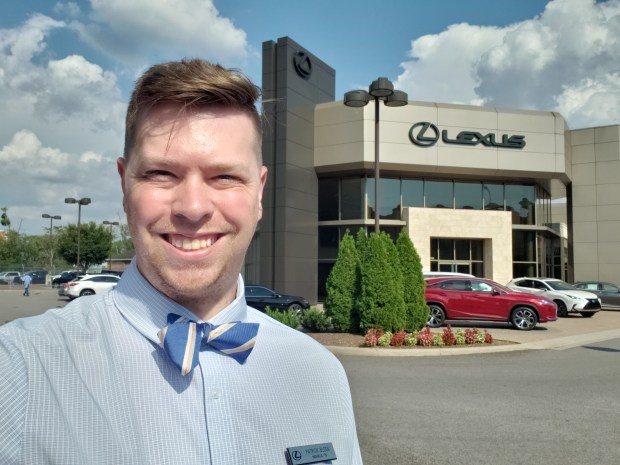
Patrick’s dream job was a position as a sales consultant with Lexus of Nashville. He believed that a high-line dealership was well-suited to his personality, and that car sales rewards hard work more than many sales positions in other industries. Patrick emailed the General Manager his newly enhanced video resume on our platform.

Shortly after he emailed the video resume, Patrick received a notification that the GM had viewed it. He was called in for an interview the very same day, and spent three hours at the dealership. While he was in an interview with a second hiring manager, Patrick received a notification that someone else in the dealership was viewing the video as well. It turned out it was the Internet Sales Manager, who then joined Patrick during his second interview, and raved about the video.

Shortly after this interview, Patrick was told that Lexus of Nashville was interested in hiring him, and he began the hiring process that included background checks, two more interviews and a drug test.

Patrick began working at Lexus of Nashville in July. Needless to say, Patrick is a huge believer in the power of video and he uses video in his new position to respond to leads and connect with active car buyers. When I asked him whether he thought his video resume was the reason he landed his dream job, Patrick claims it was 100%, absolutely the reason.

“I was nervous about using a Video platform during my job hunt. Flick Fusion was an awesome tool for me to use as it generated very professional emails, gave me visibility into how excited the recipients were, and allowed me to see myself presenting via the platform,” said Patrick. “Every person I shared this with was blown away at the idea of integrating video into the job hunt, especially during COVID. I was immediately separating myself out from the candidate pool with a small amount of extra effort. The impact it had landed me the job I had said I wanted for a long time. After what I’ve learned, I use video even more now in my job on a day to day basis.”

This story is just an example of how ubiquitous video is becoming in the auto industry; and I think it’s a good story of how a person used video to make themselves stand out in a really tough job market.

Your salespeople can easily use videos to make themselves stand out in the same way that Patrick does. When leads come in, have your sales team use pre-recorded videos, and/or live-streaming video calls, to connect with prospects. Video instantly captures and engages attention in a way that regular emails and phone calls simply can’t duplicate.

And if you’re ever searching for a new career opportunity, use a video resume to market yourself! You may land your dream job, just like Patrick.

How to Shoot Inventory Videos That Sell

by Brian Cox

As published in the June issue of AutoSuccess

Car shoppers are relying on videos more than ever to help them with purchasing decisions. For car dealers, the first step in creating an effective video marketing strategy is to start with inventory videos. Stitched photo videos are a great option and deliver a better shopping experience for your customers than static photos.

However, if you really want to up your game, implement a process for full motion inventory videos. Live action videos are proven to engage more shoppers and convert more leads.

The good news is you don’t need a professional videographer or expensive equipment. You can start with a smartphone. Expect that the first few videos you shoot will be horrible. That’s okay. Practice makes perfect.

Here’s a quick primer on how to shoot professional looking inventory videos that sell.

Video Quality

First, get to know your equipment and learn how to use it. Small adjustments can make a big difference when it comes to video quality. Shoot with a 16:9 (horizontal) aspect ratio and experiment with different settings. The settings we recommend are:

Frames per second: 30

Shutter speed (exposure): 1/60, 1/125, or 1/250. The lower the light conditions, the lower the shutter speed. However, lower than 1/60 and your shots may be blurry.

ISO setting: It depends on lighting. If it’s a cloudy day or you’re shooting in the shade, use a higher ISO setting. However, the higher the ISO, the more grainy your video will be. Keep the setting as low as possible and never go above 800.

Aperture: This setting affects depth of field. If you want to bring the car into focus and blur the background, use a larger aperture setting. If you want both the car and the background to be in equal focus, use a smaller aperture setting.

Audio Quality

When it comes to audio in inventory videos, there are three options:

  • Talk while shooting the video
  • Add voiceover in post production
  • Use automated voiceover

If you choose to talk while shooting the video, invest in a good quality wireless microphone with noise reduction. Often it’s easier and more professional to lay down a voiceover track in post-production. If you’re not comfortable with either of these options, try an automated voice over option. With the right application, all you have to do is shoot the video and a data-driven audio layer is automatically added to your videos.

Video/Audio Content

When deciding what to say in your videos, the most important thing to remember is this: information is important, but emotion sells! Your job is to make the car shopper want this car over any other car they’re considering.

The best way to accomplish this is to tell the viewer WHY a feature is important. For example, if a vehicle has a built-in GPS system, add a comment about how a GPS “keeps you from getting lost and keeps you on time for appointments!”

In general, it’s best to keep inventory videos between 1.5 and 2.5 minutes in length. However, there are some dealerships that produce videos from three to four minutes in length that have high completion rates. It depends on the quality and presentation of the video.

Don’t forget to include your dealership’s unique selling proposition (USP). Why should the viewer buy this car from your dealership instead of from the dealership across town?

Informational and Emotional Enhancement

An effective inventory video strategy is to have the audio focused on the vehicle’s features and benefits, as well as your dealership’s unique selling proposition. Then, use banner overlays and other visual elements to relay additional information important to the car shopper, such as:

  • MSRP data
  • Rebates and incentives
  • Mileage
  • CPO content
  • CARFAX data
  • Dealership specials

All the information listed on the VDP page should be included in the video. Be sure to integrate conversion widgets into your videos, so when viewers click on the video they’re brought to a landing page.

Don’t forget to include a call to action at the end of the video! You must tell the customer what you want them to do, and give them a reason to do it.

Visibility

Once your inventory videos are complete, the next step is distribution. The more touch points your videos are viewed on, the more leads you will get. Make sure your inventory videos are viewable on:

  • Your website’s Vehicle Display Pages (VDPs)
  • YouTube, Facebook and other social media channels
  • Third-party shopping sites such as Cars.com, Autotrader.com or eBay
  • Email marketing campaigns
  • Craigslist ads (provide a URL link to a video landing page)

To get your inventory videos ranked by Google, make sure your website provider utilizes a video sitemap for your website. A video sitemap greatly increases video SEO rankings.

The ability to produce quality vehicle inventory videos is the first step in creating an effective online video marketing strategy, guaranteed to draw more customers to your website and convert them into leads. Fortunately, these days, it’s easy and fast to create and distribute powerful full-motion inventory videos designed to capture car shoppers’ attention, educate and inspire emotion.