video

Live Video Walkarounds: Are they Worth the Effort?

by Tim James

While most forms of digital marketing offer some value to dealers, the one constant has – and always will be – the better your inventory merchandising, the higher your sales.

In the digital world, your merchandising takes place on your VDP Pages, making your VDP Pages one of (if not “the”) most valuable pieces of digital real estate that you have today. The goal of the merchandising on your VDP Pages is to get a consumer emotionally attached to the vehicle, to take “mental ownership.” Or, at a minimum, to generate enough interest that the shopper will come to your store and take a test drive. If you can’t obtain one of these goals, then you hope that your presentation of the vehicle at least had a large enough impact on the shopper that they will remember one of your vehicles as they continue their shopping and bounce from site to site.

This is why you invest the time and/or money into your current digital marketing strategy: You have a website that gets good traffic and that has good flow to the Vehicle Details Pages (VDPs); pay 3rd parties for VDPs on their sites; have high quality photos for each vehicle on its VDP; use a good quality vehicle description for each vehicle; and even have all kinds of “conversion widgets” and such on your VDP Pages. You know how important your VDP Pages are. And you currently invest a lot of time and money into your efforts to have the “best” presentation of your vehicles as possible on those VDPs.

Now, up to this point, I haven’t told you anything that you don’t already know. But let’s consider this:

• People retain 20% of what they hear, 30% of what they see, and an amazing 70% of what they see & hear combined. This means that a shopper is at least 40% more likely to form an emotional attachment and remember “your” inventory if they are able to watch videos of the vehicles on your VDPs.

• More than 85% of today’s consumer’s say that they prefer product video over photos and a text based product description. Shoppers are significantly more likely to spend a greater amount of time on your VDPs — and more likely to return to YOUR website at a future time — if they know that they can receive their content the in the form in which they desire to receive it…video.

• Live Inventory Videos average 600% more engagement than stitched photo videos. This means that having a stitched photo video is better than not having a video at all; however, you will receive a significant boost in engagement if you are utilizing live inventory videos. This IS the best presentation of your vehicles (merchandising) possible for your VDPs.

The actual process of shooting a live inventory video only takes around 2 to 5 minutes per vehicle. Yes, it may take you a little longer in the beginning, when you first start shooting the videos, and before you are comfortable with the process. But, after you’ve shot a few, you should easily be able to get your process down to the 2 to 5 minute range. The actual process of shooting a live video is hardly an overwhelming investment of time, especially when considering the engagement and conversion benefits.

What DOES take time is everything else. You have to manually upload the video to a “host” (or multiple hosts), rename every file as you upload it, and then manually process the video URL to each location that you would like for the video to play. I’m sure there are plenty of you reading this who remember the days that this same “time consuming” process was at one time true for your photos. Shooting the photos was the easy part, but to get your photos to all of the various digital touch-points, you had to manually rename them and upload them touch-point by touch-point. Instead, many dealerships would either choose to not keep their photos current on the various digital touch-points, to outsource the photo process to a 3rd party, or would hire an in-house staff to do nothing but shoot and upload photos all day. As time progressed, and as dealerships started to realize how important the photos were to the merchandising process, more and more started investing in technology that made the upload and distribution process fast and easy. They still had to have someone shoot their photos, but that’s all they had to do and technology took care of the rest.

The great news is that this same technology now exists for your videos. All someone has to do is shoot the video (2 to 5 minutes) and technology will automatically name, upload, and distribute the videos for you (and often in real-time). In fact, you can even have your photographer shoot the video for you at the same time they are shooting their photos. And if you aren’t comfortable with your photographer talking about the vehicles while shooting the videos, then technology can even automatically add the audio layer to the video as it is being automatically uploaded. And you could even have one of your Sales or BDC Team members (from the comfort of their own office) re-record the audio layer of the video and instantly replace the automated audio layer on all of the digital touch-points (in real-time), if so desired. No more wind or highway noises, no airplanes flying overhead, and no worrying about the weather.

Even greater news is that these same videos can then also be utilized by your sales team and/or BDC team for personalized walkaround videos for lead responses. Instead of the time consuming, over and over process of shooting one video that would be seen by one person, of checking out the keys, finding the vehicle on the lot (in the heat, cold, rain, snow), pulling the vehicle out of the line, shooting the video, parking the vehicle, walking back inside, checking in the keys, uploading the video to a “host”, grabbing the URL and sending the video URL out in an email…the sales or BDC team member can now simply pull up the existing video (being used on the VDPs), re-record a personalized message as the audio, add background music (if desired), click save, and email out…all in less time than it takes to check out the keys and find the vehicle on the lot.

We used to find all kinds of excuses for why we didn’t keep our VDPs (across all of the digital touch-points) updated each day with 25, 35, 55+ photos. Excuses ranged from “it’s too much work” to “it costs too much money (if outsourced).” And I’m sure you can find plenty of new excuses as to why you aren’t shooting live videos for your VDPs and using walkaround videos for your lead responses…but the fact is that “it’s too much work,” is no longer a valid excuse, especially when you consider the impact that it will have on your sales.


Consumers Like Video So Much They’re Paying More To Watch It

by Tim James

Video, and especially mobile video, is fast becoming the media of choice for consumers of all ages. From the cable-free movie, to online streaming services, to the latest and greatest phone apps storming the scene, we are all consuming data at a record pace. According to a white paper by Cisco, mobile data has increased in size nearly 30 times since the year 2000. And mobile video accounts for 55 percent of all data traffic.

Today, consumers are increasing data plans with their cellular phone companies so as to consume more video – and they’re doing so willingly — according to a recent article on Mashable. The article reports the massive growth of the mobile live-streaming app, Meerkat. With Twitter entering the live-streaming market Monday via their recent acquisition of Periscope, smartphone users are finding more ways to share video with each other than ever before. In fact, in less than 24 hours, Periscope broke into the top 50 apps on the iTunes app store illustrating the remarkable demand for video content. And, according to the article, “wireless carriers have invested more the $1 trillion in the last few years to build out networks capable of serving massive amounts of data and high speeds.”

And as far as video itself — Almost every major social media application has integrated video into their platforms. Why? Because that’s what their users want. Videos are given more organic reach on Facebook. Platforms are opening up their APIs to allow for video embedding. User-generated video content is exploding. And consumers have made it very clear that they like video content so much that they are willing to increase their cellular phone budgets so as to consume more of it. If this is the case, then why not market to them in their format of choice?

Back in the day, most people read physical newspapers and watched local television… and that’s where car dealers advertised. For lack of subscribers, newspapers moved online, or went out of business. And then, as streaming video services became a more popular (and less expensive) alternative, people started ditching cable.

None of us knows what the future will bring. Change will come, but we don’t know what or when. All we do know for certain is that right now… video is where consumers have placed their attention. And not just video, but especially in mobile format. If only for that single reason, that’s the content car dealers should be producing. Take a look at your marketing and see how you can improve on your video content. It would also be wise to ensure that your web content and any video is mobile ready, so this new generation of consumers can access and even share your content.

Jameson Irish Whiskey Takes Video Marketing to the Next Level

by Brian Cox

Jameson Irish Whiskey has taken video marketing on Instagram to another level – “the first brand to successfully utilize 3D video for advertisements on Instagram and Facebook,” according to a recent article in the Independent.

The video itself is very simple, and suggests that you slide a shot to your friend. It then proceeds to slide a shot glass of whiskey towards you, the viewer, which then appears to come off the page. It’s rather clever how they were able to create the illusion of 3D on a non-3D platform.


https://instagram.com/p/0LZMCKq-Ys/


According to many studies, brands are increasing their content marketing budgets to include more video marketing. Social media platforms, such as Facebook, Twitter and YouTube, are going to war to become the World’s premier video platforms, something that YouTube has enjoyed for years.

As is the case with any marketing, the ability for advertisers to cut through the noise with video marketing will continue to increase in importance. In addition, marketers should not rely on a single platform to host their videos. Regardless of who ends up winning this battle for viewership, consumers will still have their preferences. Believe it or not, some people still use MySpace, and other platforms that many abandoned long ago. This is why it’s important to ensure that your content is on all of the sites YOUR consumers visit. You never know where your next sale will begin their journey. Bear in mind, however, that to accomplish this you will either need spend a lot of time posting your video to each individual site. Or you can go the route of automation to get it done more efficiently.

Successful video marketing today demands entertaining and creative video that engages your audience. It’s not simply about having video content; it’s having the right video content. That can only be accomplished with a solid strategy that’s executed consistently.

Even a micro-video should have the same concepts behind its creation – creative, outside the box thinking – it should be engaging. What makes these type of videos a success is not any different from the winning formula for any videos — whether it be a “Why Buy from Me,” company culture-type video, or a vehicle walk-around video.

You only have a short period of time to catch and keep a consumer’s attention. Make sure that you use that time wisely and you’ll find an increase in views and conversions.

How A Dog May Have Just Reinvented Pre-Roll Video Ads

by Brian Cox

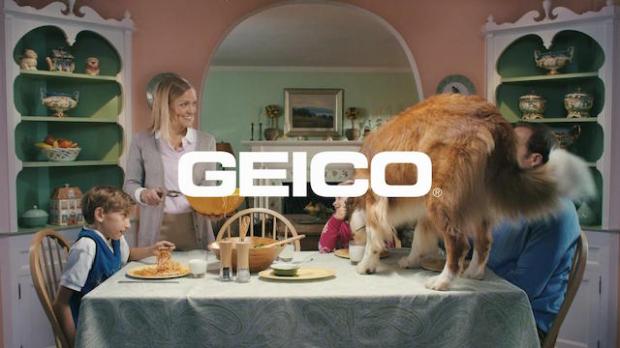
We all know how annoying pre-roll video ads can be – especially when they have nothing to do with the video content we’re about to watch. Many people hover their mouse cursor over the countdown just itching to click “Skip Ad” the second that option is available. As reported by USA Today, the insurance company Geico, may have found a way to keep people around to watch.

In a nutshell, Geico used only the first 5 seconds (the amount of time someone would have to watch before the “Skip Ad” option appears) and stated, “You can’t skip this Geico ad because it’s already over.” In the background a family acts as if they are frozen in time at the dinner table. On screen is a dog that then proceeds to eat everything on the table while the actors stay as frozen as possible (although you can tell that they aren’t). It’s actually very well done and pretty amusing. The trick is that the Geico logo is on screen the whole time so, in essence, you’re watching the whole ad. The article reports that, on March 3, the ad had “logged more than 725,000 unaided YouTube videos in one day.” That’s pretty incredible.

The reason this ad is seeing so much success is simple. It is one that every dealer or marketer should take note of – they had a strategy. The producers of the ad, the Martin Agency, knew they faced the same challenges and had to solve the same problem that every other company utilizing pre-roll video does – How to stop people from clicking “Skip Ad.” Most companies fail this challenge as not many of these pre-roll video ads tempt anyone to stick around and watch.

So, rather than try to answer the question which most marketers have been unable to, they chose to think outside-the-box. With just 5 seconds to convince people not to click “Skip Ad,” rather than putting the meat and potatoes of the ad AFTER those five seconds, (which is how most traditional pre-roll is organized), they chose to put it BEFORE.

Then they got creative…

What would make someone continue to watch an ad – that’s not supposed to be an ad – after the “Skip Ad” option appeared? From the buzz this has generated, it would seem that a dog having a good old time tearing up everyone’s dinner from atop the table was a winning formula.

I suspect that the success of this campaign will cause other companies to start using those five seconds in other creative ways. The important thing to remember is that simply throwing video onto the Internet is not effective – and it’s not video marketing. Without a strategy in place to make your video marketing efforts successful, you may just be wasting your time.

Marketing Trends Illustrate the Importance of Video

by Tim James

If you still aren’t sold on the importance of video marketing, it only takes a brief glimpse into recent news to illustrate just how important video is in marketing. There are many news stories relating to acquisitions, statistics and trends, which highlight the increasing importance – and value – that platforms of all kinds are placing on video content. The common thread that exists throughout all of these stories is companies recognize consumers have a strong desire to view video content and are positioning themselves to be able to serve that up.

Consider these recent stories:

  • Facebook videos are now receiving 3 BILLION views per day. Facebook is all about relevance. It wants to serve up content that its users want to see. A recent report by social media company, SocialBakers, reported that video posts surpassed all other types of content with the highest organic reach as well as highest fan reach. In addition, Facebook gives videos that are directly uploaded to their site more organic reach than videos shared via link from YouTube. This is in an effort to boost its own video platform. Facebook has even begun to solicit celebrities and large media companies to upload their videos straight to Facebook, rather than YouTube or other platforms.
  • Twitter recently renewed its agreement with Google to allow access to Twitter’s data stream. Since their breakup in 2011, Google has had to scrape Twitter in order to serve up tweets in search results. With this new agreement in place, Google can now index Twitter content in real-time providing more SEO benefits for Twitter content. Seeing as Twitter recently added a feature allowing video tweets, it’s entirely possible that Google could serve up your tweeted videos in real-time search results.
  • Last November, in order to deliver better video ads across its many properties, Yahoo acquired BrightRoll, a video ad delivery platform, for $640 million. One month later, they acquired Evntlive and Ptch, both of which cater to the video content industry and, according to many sources, made them the largest video platform in the United States.
  • Even AOL has been bolstering its video capabilities with the acquisition of three video marketing companies in the past 5 years –the 5Min video platform for $65 million in 2010, Adap.tv for $405 million in 2013 and, most recently, Vidible in December, for an estimated $50 million.
  • There has also been a plethora of video sharing apps emerging in the last few years such as Vine – which ultimately partnered with Twitter – and Instagram, which added a video sharing feature and was purchased by Facebook for $1 billion.
  • And last, but far from least, we have the largest player of them all – Google – which acquired YouTube way back in 2006, and has grown it into the second largest search engine in the world. It is currently racing Apple to become the first company to be valued at $1 trillion.

This is just a small sample of the investments major companies are making in video. It shows the importance successful businesses are placing on video content. And, I would say, a strong belief that video content is the future. I highly doubt anyone could argue against the fact that these companies know what they’re doing, simply based on their combined net value of $1.3 trillion. If all these companies were joined into one country, this humungous sum of money would place it at number 16 out of all 194 countries in the world.

I’d say they know what they’re doing.

As Hispanics buy more cars, stores add videos in Spanish

Eighteen months ago, Coast Nissan in San Luis Obispo, Calif., introduced Spanish-language videos with each car posted online.

General Manager Eric Ideman said it was a response to two trends:

•  His customer base along the central coast is heavily Hispanic, with many speaking only Spanish or preferring to communicate in the language.

•  Data showed increasing numbers of online vehicle-shoppers watching car videos.

“We have lot of people searching [for cars] in Spanish,” Ideman said. “We wanted to make sure they could get their videos in Spanish, too.”

Hispanics account for an increasing percentage of car purchases nationally, causing dealerships across the country to reassess how they market to the demographic, according to Eley Duke III, vice president of Duke Automotive (Chevrolet-Buick-GMC-Cadillac) in Suffolk, Va.

The videos at Coast Nissan and sister store Coast BMW appear as links on the Web pages of specific vehicles. They are for new and used vehicles. And they are either vehicle walk-around videos or a series of still photos spliced together with voice-over.

Duke said the area has a small Hispanic population nearby. But, he said, he added Spanish-language videos in December to the inventory he shows on the dealership website and social media feeds because he doesn’t want to lose a single sale to a language barrier.

Duke, like Coast Nissan, added the videos at the recommendation of one of its digital ad agencies, ZMOT Auto. The agency recently announced a deal with inventory video maker Flick Fusion to provide Spanish-language voice-overs to Flick Fusion’s videos.

In 2014, Hispanics accounted for 12 percent of retail vehicle registrations minus fleet and commercial vehicles, according to IHS Automotive. The number was 9.3 percent in 2010, according to Marc Bland, IHS Automotive vice president of diversity and inclusion. “If an automotive brand is looking for growth, there’s no better place to look than the ethnic consumer — with Hispanics leading the way,” Bland said.

The U.S. Census Bureau projects that Hispanics, who numbered 52 million in the country in July 2011, or 17 percent of the population, will account for 30 percent of the population by 2050.

Duke said video-watching also is on the rise among car shoppers. “Videos are such a big part of a visual society,” he said.

According to Google’s “Digital Drives Auto Shopping” study published in November 2013, more than half of auto shoppers watch 30 minutes or more of video during their shopping journeys. Moreover, one in four watched an hour or more, the study found.

In recognition of those trends, Coast Nissan is offering all of its online inventory with videos in English and Spanish, Ideman said.

The store is not as close to heavy Hispanic foot traffic as some competitors, he said. So Coast Nissan also is ensuring that its paid search ads, blogs, chat and website content are in Spanish, too, so those customers can find and interact easily in either English or Spanish, he said.

It isn’t good enough, Ideman said, to get an online lead or phone call from Spanish-speaking customers and make them wait for a response until the store can get a bilingual salesperson to contact them.

“People want an immediate response, or they go away,” he said.

Coast Nissan sells about 80 vehicles per month split evenly between new and used.

Of the store’s six salespeople, four are bilingual. And so is Coast Nissan’s finance director, who is responsible for closing deals in finance and insurance.

Ideman said, “We want to hold them all the way through the transaction.”

Written by David Barkholz [Originally published 2/16 on Automotive News]

The Most Important Metric In Gauging Video ROI

by Tim James

The question most pondered by businesses when advertising is perhaps the most important:

“What is my ROI?”

It doesn’t matter whether we’re discussing television ads, radio, 3rd party leads,

that gorilla on top of your building, or the contest you’re running on social media; all roads lead back to the ability to answer that one simple question. Dealers and their vendors use call tracking numbers, unique landing pages, and a plethora of reports to justify the monthly expense of any given marketing campaign. Some dealers swear that a product or service works, while others might complain that it does not.

In the case of video marketing, if you don’t believe or are unsure about its effectiveness, there’s one simple metric that you should take a look at:

Inventory turn.

You’re already keeping track of this. You know the average length of time a new or used car sits on your lot. You might even hold your used car manager accountable for this. This isn’t something that sits in the pile with all of the other reports. It’s something that is vital to the dealership’s profitability and, more importantly, the bottom line. Flooring costs can get quite expensive. The longer a car is kept in stock, the less profit it’ll make. In terms of time alone, that vehicle is depreciating daily. That’s where video marketing comes in. It can make your vehicle stand out and engage online shoppers better than any other form of media.

If you have a comprehensive video marketing strategy in place and are executing on that strategy (taking the videos, making them engaging, getting them on all of the key touchpoints), take a look at your inventory turn to gauge its effectiveness. What was it before video marketing? What is it now?

The bottom line is that any dealership marketing strategy has one simple goal: selling more cars. Video marketing done right will speed up your average inventory turn. And the ONLY way it can accomplish that is by bringing in more customers who are buying your vehicles more quickly. And that’s the only answer that matters.

They Watched Your Video. Now What?

by Brian Cox

There’s no doubt that video marketing is exploding in popularity with businesses and consumers. Both Facebook and Twitter are investing heavily in video and, in the case of Facebook, rewarding those who upload their video straight onto its extended reach advertising platform.

The days of reading long text descriptions and features of vehicles on websites are quickly fading. Manufacturers and dealerships are putting more effort and bigger budgets into video marketing. However, no matter how creative, funny, informative or compelling a video is, if it’s missing one simple ingredient, it will not help you sell more of anything – whether that’s a salesperson, the dealership or a car.

What is that simple ingredient? – It’s a call-to-action.

In terms of functionality and conversion, all websites typically contain calls-to-action. Customers that visit a dealership’s website can gather the information they want and, most of the time, there is a call-to-action on the page they’re viewing; be it the home page or a vehicle description page. Many videos, however, have no call-to-action. An online car shopper will visit multiple touchpoints when researching vehicles – Think of all of the sites your videos are on that the consumer could visit. You may control the content and call-to-actions on your own website, but it’s not always the case on every touchpoint.

Many dealers incorporate personalized video e-mail responses and walkarounds and introduce staff on their “About Us” pages. These are all great but, in many cases, they neglect to incorporate the single most important question that a consumer will ask after watching:

What do I do now?

Even if you have a call-to-action on the actual webpage that the consumer is on while watching your video, include a call-to-action within the video itself. It doesn’t have to be long or confusing. It should be simple. Something like:

  1. Call us at XXX-XXX-XXXX or email us today at XXXXXX
  2. Make sure to mention this video to claim your special offer
  3. Make sure to visit our website and get the exclusive Internet pricing only available on our website

If you’re not asking viewers of your video to do SOMETHING at the end of your video, they won’t do ANYTHING and you’ll be missing out on conversions. Guide the consumer through the funnel in relation to the video content they just watched. If the video was a “Why Buy From Me” sent by a salesperson, include their contact information at the end. Another thing that can be very beneficial is to incorporate a call tracking number on your videos.

If it’s a vehicle walkaround video, direct your customers as to what they should do next. Create a video explaining how your dealership assists people with challenged credit then direct them to your online credit application to get started. If you produce service videos, make sure to include an offer, coupon or, at the very least, an invitation to the dealership or to schedule an appointment.

It’s really not a difficult concept. Almost every other form of marketing will have calls-to-action (if they’re any good). So why shouldn’t you also include them in your videos? It’s up to you to tell your customers what you want them to do. If you guide them properly and with relevance, you’ll find that more of them follow the path you’re leading them down and will see more conversions.

Playing to Customer’s Emotions in Marketing Works

by Tim James

I have long preached the fact that including video in your marketing is an effective way to get customers emotionally connected to a specific car on your lot. This visual connection to the senses serves to enhance the appeal of a vehicle to an online shopper. If there was some technology that allowed consumers to touch, feel and smell your car while shopping online, I’d be all in. Unfortunately, the online vehicle shopping touch-points that exist today don’t allow for 4-D shopping; they are currently limited to a flat screen.

So, how about taking your video marketing game to the next level and incorporating marketing messages that play to consumer emotions. This is far from a new marketing tool. In fact, you see it every time you watch television or the latest viral video. Super Bowl commercials are typically prime examples: many are creative, funny and even touching.

Messages that create a sense of urgency, build trust, offer an incentive or some value added benefit, or appeal to some perceived status, are not uncommon in manufacturer and dealership marketing. What’s not as common is seeing a dealership incorporate these emotional triggers into their inventory marketing – at least in a video. Consider how much more effective the use of the techniques would make your inventory videos. You only have a few seconds in which to capture an online car shopper’s attention in your video. If your video captures the customer’s attention quickly through creative messages that play to their emotions, chances are they’ll watch longer. This can build more excitement in your vehicle over other similar vehicles. There’s no doubt that the more emotionally connected a customer is when they submit that lead, the more likely it will result in a sale.

Have fun with your walkarounds. Don’t simply point your video camera or smartphone and walk around the vehicle while describing it in monotone. Excitement is infectious. We use this all of the time when the consumer is on the lot. Keep your videos interesting and transfer your passion and excitement for the vehicle into the video. This will undoubtedly have a stronger effect on the emotions of any customer viewing it.

You don’t even have to be terribly creative (if you aren’t the creative type). Your dealership most likely has already employed an ad and marketing agency to do that. Simply look at the messages already going out to customers via traditional media and incorporate those unique selling propositions into your walkaround. These type of messages can then help sell you and the dealership, not just the vehicle.

Let’s face it; there are probably over 100 shiny vehicles, similar to the one you have online, that an online shopper is viewing. Anything you can do to give your vehicle an edge over the competition will help your vehicle stand out in the customer’s mind. Play to their sense of fun. Build a sense of urgency. Build trust and offer value in your video walkarounds. Step outside-the-box with a little creativity and, I promise you, your vehicles will get more attention and you’ll see more people submitting leads that are farther down the funnel and more emotionally invested. And that can only bring you more sales.

Winning Is Knowing The Rules Better Than Your Competitor

by Brian Cox

On January 11, the New England Patriots faced the Baltimore Ravens in a contest that would dictate which team moved onto the AFC Championship game. Going into the game as heavy favorites to win, the Patriots quickly found themselves losing the game 14-0 quickly. Undeterred, they powered through trading touchdowns with the Ravens for the remainder of the game to ultimately win. The real story that comes out of this win, however, is how the Patriots reached into their bag ‘o tricks to achieve what they had come to – win.

Several players on the Ravens were quoted as follows in an article in the Boston Globe

“They pulled out every trick play in the book” – Chris Canty, Ravens defensive end.

“They couldn’t just drive the ball down on us regular. They had to do something tricky.” – Ladarius Webb, Ravens cornerback.

“You’ve seen one gimmick, you’ve seen them all.” — Terrell Suggs, Ravens linebacker.

And the most profound…

“It’s not something that anybody’s ever done before.” – John Harbaugh, Ravens head coach.

John Harbaugh and the Baltimore Ravens were not just upset that they had lost, but that they had done so because of what they deemed trickery on the part of the Patriots. Their anger, however, was misdirected as the Patriots did nothing wrong, according to the NFL rules.

New England Patriots quarterback, Tom Brady, summed it up best in his reply to their criticisms when he said, “Maybe those guys got to study the rule book and figure it out? We obviously knew what we were doing.”

Patriots coach Bill Belichick did. Any other team in the NFL could have pulled off the plays and formations that the Patriots did which helped them win that game – but nobody ever had. By knowing the rules and using them to his team’s advantage, he was able to throw unexpected plays and confuse his opponents enough to win. On the other side of the field, Baltimore Ravens coach John Harbaugh, was complaining about the rules and how the Patriots won. He was so incensed during the game that he even, literally, cried foul (and got one) when he ran onto the field to argue with officials.

Being successful in business and marketing is no different. Dealerships have so many rules placed on them by so many different regulating bodies, it’s surprising that they can say anything more than “Here is our car. You should buy it.” To win in the automotive industry, you have to be a leader.

Business leaders are creative. They find ways to innovate and do things that their competitors aren’t. They know the rules of the game backwards and forwards. They find strategies and incorporate plays that nobody else does, and then use them to win. Whether that’s winning a new customer, a star employee or simply sales volume, they have thought about all scenarios and crafted strategies to achieve them. There are plenty of books that tell you how to be a successful leader, run a successful business, have success in marketing and hire superstars. Every business has access to those resources. Success lies in not only knowing the rules but in knowing the rules so well that, when you pull out that trick play, your competition doesn’t know what hit them.